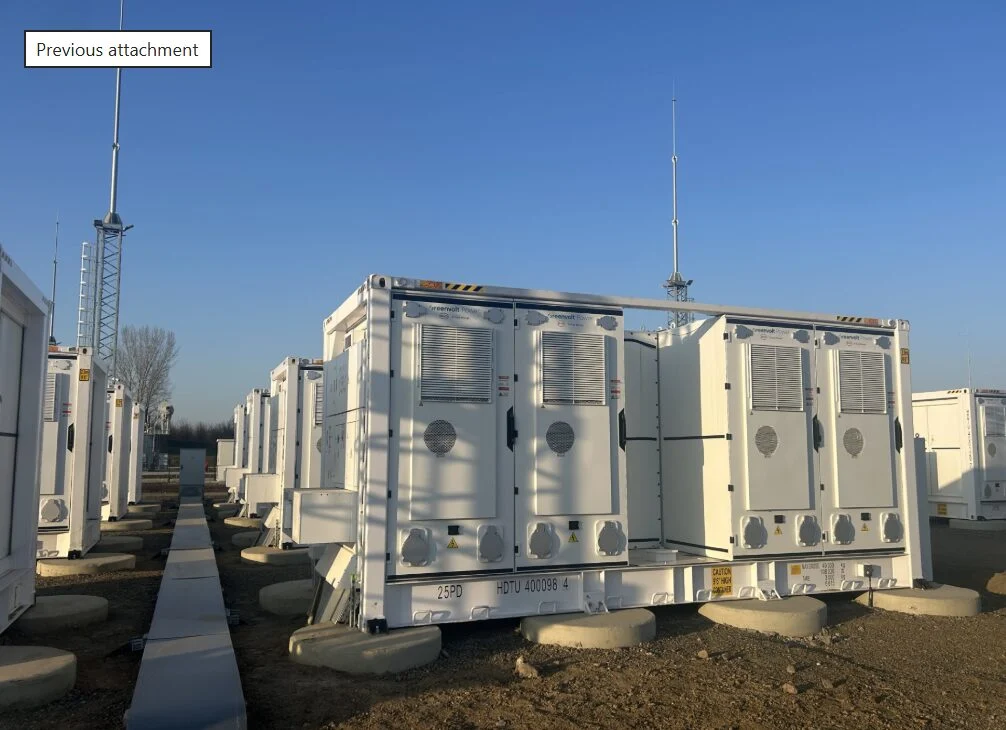
IPP Greenvolt has put a 99.8MW/288.6MWh BESS into commercial operation in Hungary, the largest in the country, while pipelines and projects have been progressed in Italy, France, Netherlands, Belgium and Spain.
Why it matters: The era of shallow 1-hour storage is over; start sizing your C&I projects for 3-hour arbitrage or watch your clients' ROI evaporate as ancillary markets saturate.
The 2.9-Hour Benchmark
Greenvolt isn't just breaking records in Hungary; they’re setting a duration standard that every developer in the EU needs to memorize. At roughly 2.9 hours of storage (288.6MWh for a 100MW connection), this project moves beyond simple frequency containment (FCR) and into the territory of serious energy shifting. If you’re still pitching 1-hour or 1.5-hour systems to C&I clients in markets like Germany or the Netherlands, you’re selling them a legacy asset that will be financially underwater by 2027.
Arbitrage is the New FCR
The 'easy money' in ancillary services is drying up as TSOs like MAVIR in Hungary and TenneT in the Netherlands see their auctions saturated. The real yield now lives in the spread between midday solar peaks and evening ramp-ups. Greenvolt’s aggressive expansion into Italy and Belgium—markets with high volatility and evolving capacity mechanisms—confirms that the IPP strategy has shifted. We are no longer building batteries primarily to stabilize the grid; we are building them to trade energy. For installers, this means your sales pitch must pivot from 'grid security' to price arbitrage potential.
The Geography of Margin
Notice the pipeline: Italy, France, Netherlands, Belgium. These aren't random picks. Italy’s MACSE (the new storage capacity mechanism) and the Dutch grid congestion crisis are the primary drivers here. If you are a mid-sized installer in these regions, you should be looking at the Tesla Megapack or Sungrow PowerTitan scale-down models for your commercial clients. The math that worked for a 100MW plant in Hungary scales down perfectly to a 1MW system for a manufacturing plant in Flanders. If you aren't integrating Energy Management Systems (EMS) that can handle day-ahead market signals today, you aren't building a future-proof system.