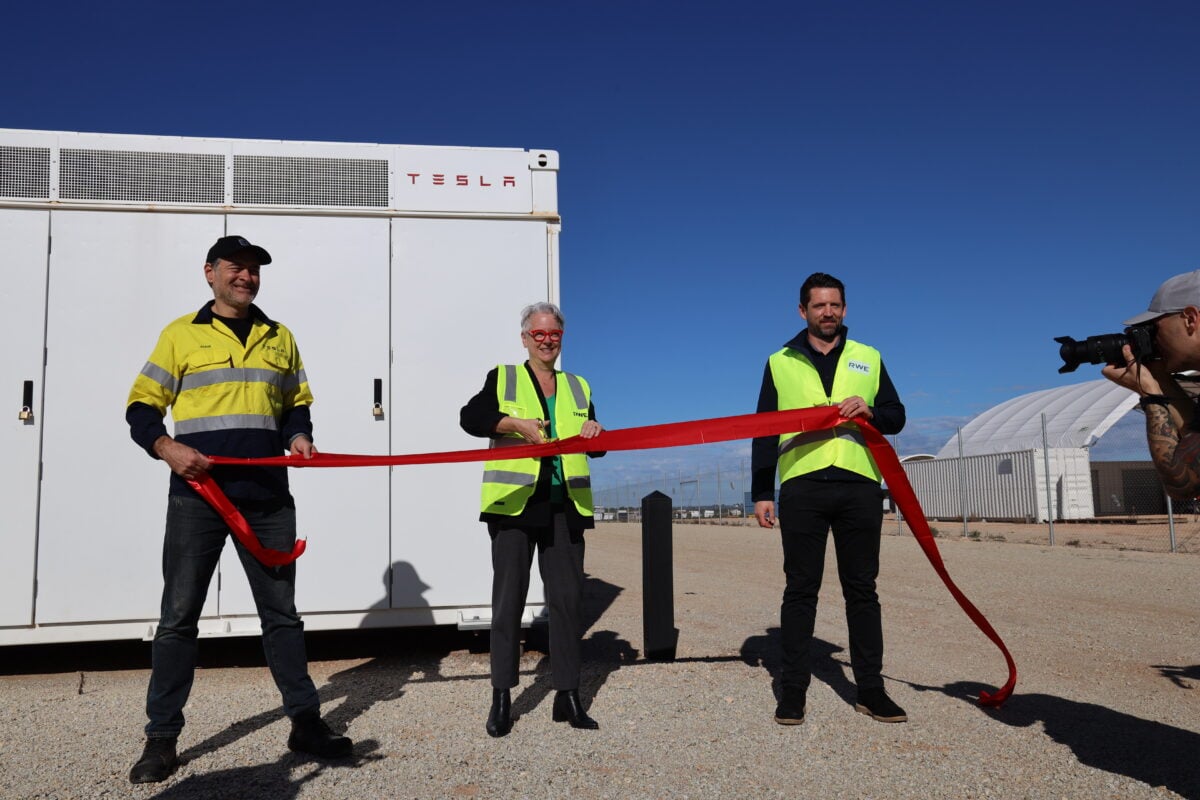
RWE Renewables Australia has officially opened the 50MW/400MWh Limondale battery energy storage system (BESS) near Balranald in south-west New South Wales.
Why it matters: Short-duration batteries are becoming a race to the bottom; long-duration storage is the only way to protect your clients from negative power prices.
While most European developers are still patting themselves on the back for commissioning 1-hour or 2-hour BESS units to chase crumbs in the FCR (Frequency Containment Reserve) market, RWE is playing a different game in Australia. The Limondale project isn't just another battery; it’s a 400MWh time-shifting machine. For the European installer, this is the crystal ball showing where our market is headed as solar penetration triggers the inevitable cannibalization of mid-day margins.
The Arbitrage Trap
In markets like Germany and the Netherlands, we’re already seeing the 'Duck Curve' turn into a canyon. In April 2024, German spot prices plummeted to -€50/MWh during peak solar production. A standard 1C or 0.5C battery (1-2 hours) is a tactical tool for grid stability, but it’s useless for structural energy shifting. RWE’s 8-hour duration is a strategic play for deep arbitrage—buying at negative rates and selling during the 6 PM to 10 PM peak when the sun is down but demand is screaming.
Stop pitching 'storage' as a solar accessory. If you aren't modeling 4-hour or 8-hour durations for your 2026/2027 C&I pipeline, you are building infrastructure that will be economically obsolete before the first inverter swap. RWE is using Australia as a laboratory to prove that LFP chemistry can scale to long-duration needs—ignore their homework at your own peril.