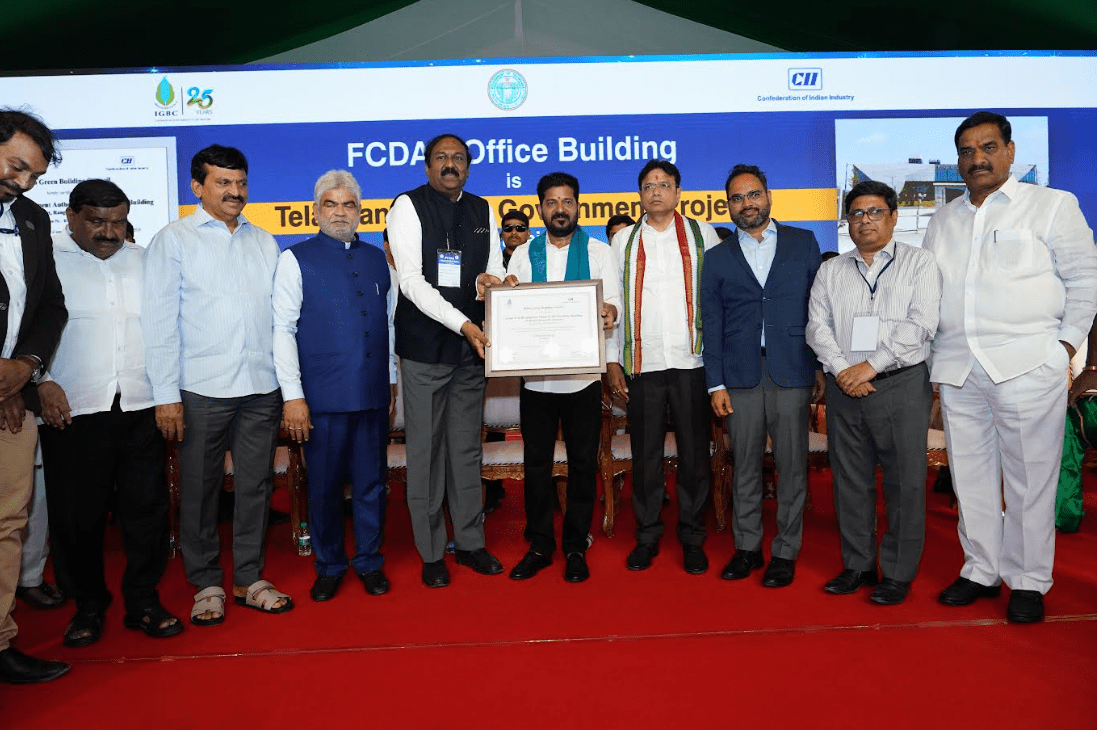
The Future City Development Authority Office Building in Telangana has achieved the IGBC Net Zero Energy Certification, becoming the first government building in the state to do so.
Why it matters: The era of selling 'solar-on-a-roof' is ending; your future margins depend on delivering certified net-zero building performance that satisfies EU EPBD mandates.
The 'Design' vs. 'Reality' Gap
We’ve seen this movie before. A project gets a shiny certificate for Net Zero Design, the politicians cut the ribbon, and the EPC gets a pat on the back. But in the trenches, we know that designing for net zero and operating at net zero are two different sports. The IGBC (Indian Green Building Council) certification for Telangana’s FCDA building is a signal that public tenders are finally moving beyond 'lowest price per watt' toward holistic energy outcomes. For the installer, this means the job doesn't end when the last MC4 connector clicks; it's when the building actually balances its books after twelve months of occupancy.
The EPBD Shadow Over Europe
If you're an installer in the Netherlands or Germany, don't dismiss this as a far-off vanity project. This is a dress rehearsal for the 2024 revision of the EU Energy Performance of Buildings Directive (EPBD). The mandate is clear: all new public buildings must be Zero-Emission Buildings (ZEB) by 2028, and everything else follows by 2030. We are moving toward a world where your proposal isn't judged on the LCOE of the Jinko or Trina modules you’re speccing, but on how your system integrates with HVAC and building automation to hit a net-zero target under real-world loads.
The Margin is in the Integration