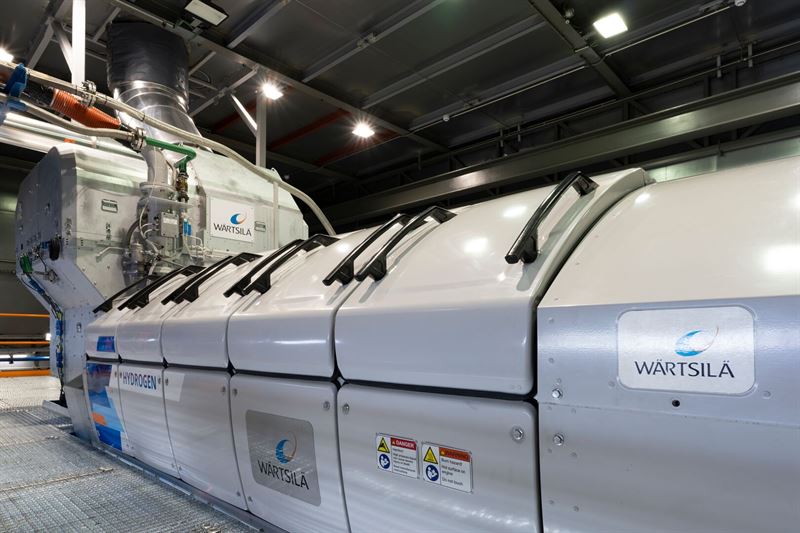
se trata de la primera demostración mundial de un motor de gran potencia funcionando con hidrógeno puro al 100%.
Why it matters: Hydrogen engines offer a long-duration storage alternative that could solve the solar curtailment crisis in ways short-duration batteries simply cannot.
The Peaker Evolution: From Natural Gas to H2
While most of the European solar industry is currently hyper-focused on Lithium Iron Phosphate (LFP) price drops, Wärtsilä just reminded us that batteries aren't the only way to firm up a volatile grid. Testing a 100% hydrogen-fueled engine in Spain—the continent's current laboratory for solar curtailment—is a calculated move. For project developers in the Iberian Peninsula, where 'price cannibalization' is no longer a theory but a daily nightmare, this represents a potential alternative to the 4-hour BESS limit.
Why Spain is the Ground Zero
Spain’s PNIEC targets are aggressive, aiming for 11 GW of electrolyzer capacity by 2030. But here is the reality check: we have a massive 'chicken and egg' problem with green hydrogen. You can’t justify the electrolyzer without an off-taker, and you can’t build the off-taker without the fuel. By proving that a grid-connected reciprocating engine can run on pure H2, Wärtsilä is providing the 'egg.' This tech allows traditional thermal plant operators to pivot without abandoning their mechanical expertise.
The Installer’s Reality
Don't expect to be installing these at a local winery next week. This is utility-scale infrastructure. However, if you are developing 50MW+ parks in regions with high curtailment, the future of your PPA might not be a battery—it might be a hydrogen-ready engine cluster. We’ve seen this pattern before with the shift from coal to gas; the winners are those who don't get sentimental about the technology, but focus on who provides the most reliable firming at the lowest marginal cost.