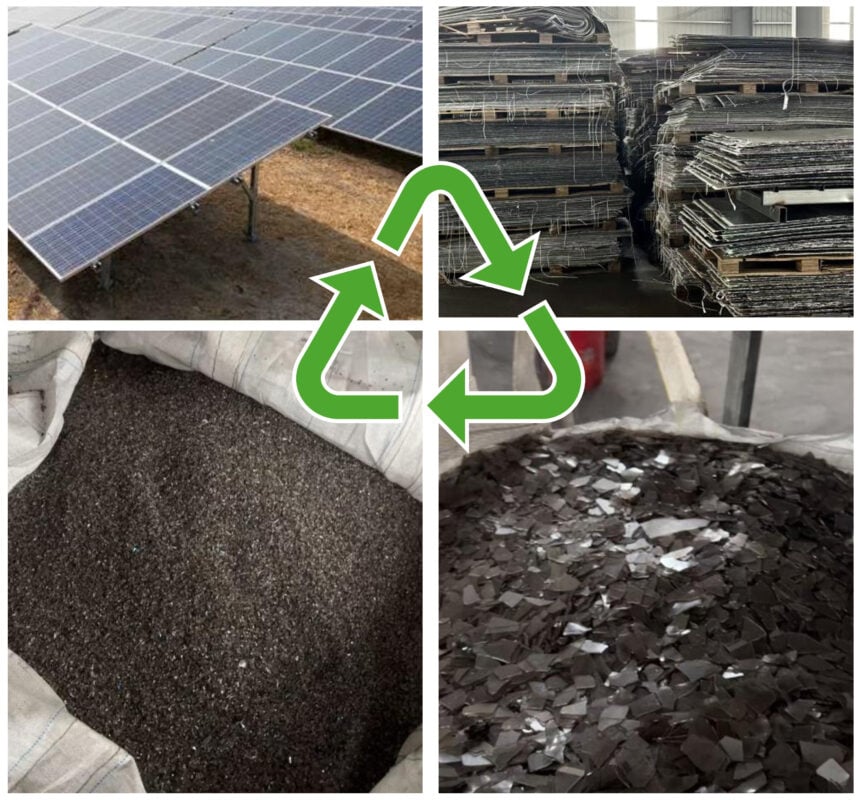
China, the world’s largest PV market, is poised to lead sustainable solar module recycling and circular manufacturing, writes Huan Li.
Why it matters: The 'waste' modules you're ripping out today contain the raw materials that will dictate the price of the modules you'll buy in 2030.
The Silver Recovery Arms Race
While European installers are still arguing over who pays the WEEE (Waste Electrical and Electronic Equipment) gate fees, China is positioning recycling as a strategic resource play. We aren't just looking at a waste problem; we're looking at a secondary raw material goldmine. By 2030, the first massive wave of early-2010s installations will hit the scrap heap. If China perfects the tech to strip silver (Ag) and high-purity silicon at scale, they won't just be selling us new modules; they'll be the ones controlling the circular supply chain that feeds the next generation of TOPCon and HJT cells.
The Repowering Reality Check
For the average European project developer, this isn't about 'being green'—it’s about the residual value of your assets. We’ve seen this pattern before in the automotive sector. If Europe doesn't scale firms like France's ROSI Solar or Germany's Flaxres to compete with Chinese state-backed recycling hubs in Ningbo, we will end up exporting our 'waste' only to buy it back as premium-priced refined materials. I've walked sites in Spain and Italy where 200kW arrays are being ripped out for repowering; right now, that glass is being crushed for road aggregate. That is a massive financial failure.
Don't be fooled by the 'sustainable' branding. This is about industrial sovereignty. If we lose the recycling race, we hand China the keys to the only part of the supply chain we had a chance to own: the end-of-life loop on our own soil.