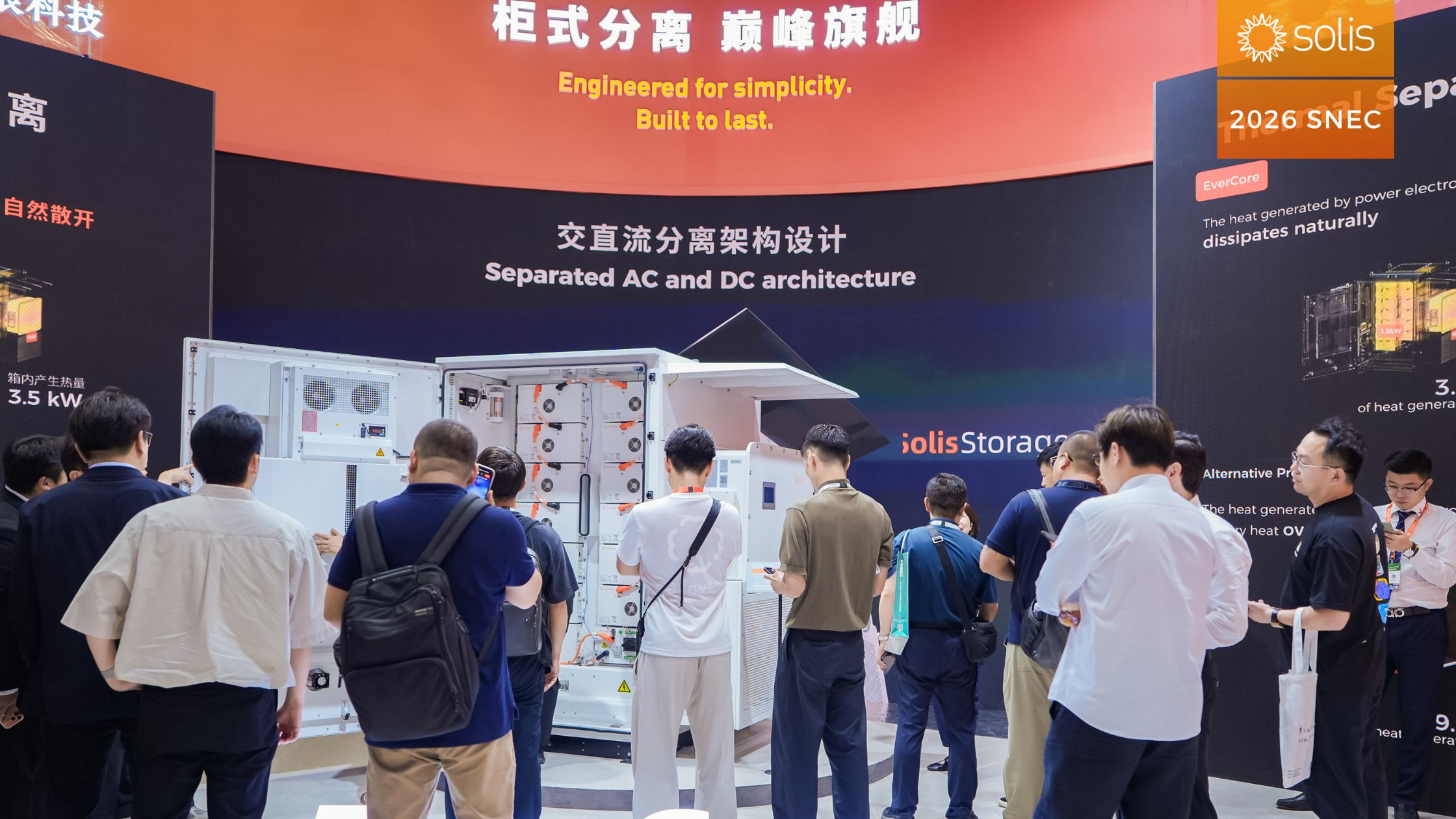
Solis excelled at SNEC PV+ 2026, garnering significant attention for its comprehensive energy storage solutions across residential, commercial, and utility-scale applications.
Why it matters: Solis is evolving from a budget inverter brand into a full-scale storage powerhouse, forcing you to choose between the safety of premium brands and the aggressive ROI of their new EverCore systems.
The Value King Moves Upmarket
For years, Ginlong Solis has been the 'safe' choice for European installers who needed a reliable string inverter that didn't break the bank. They weren't the flashiest, but they showed up. This news from SNEC 2026 confirms what we've been seeing in the field: Solis is no longer content being just a component supplier. They want to own the entire energy stack, specifically through their EverCore system.
The 'Full-Scenario' Integration Trap
Manufacturers love the phrase 'full-scenario.' In marketing speak, it means they have a product for everything from a 5kW residential shed to a 50MW utility site. For a project developer in the Netherlands or Germany, this is a double-edged sword. On one hand, having a single BMS, EMS, and inverter provider simplifies commissioning. On the other, it creates significant vendor lock-in. If Solis's software platform experiences the same growing pains we've seen with other Tier 1 Chinese manufacturers transitioning to complex storage, you're stuck with a very expensive brick and a single support line that might not answer.
C&I: The New Margin Battlefield
With residential PV demand cooling in core EU markets, the real money has shifted to C&I storage. Solis is positioning EverCore to compete directly with the likes of Sungrow and Huawei. The Money Angle: If Solis can maintain their typical 15-20% price advantage over European incumbents while delivering on their promised 'energy resilience' features, they will become the default choice for mid-market commercial projects. However, I’ve seen enough 'innovative' storage systems fail at the communication layer to know that until we see these units surviving a full winter in Northern Europe, the jury is still out on their utility-scale ambitions.