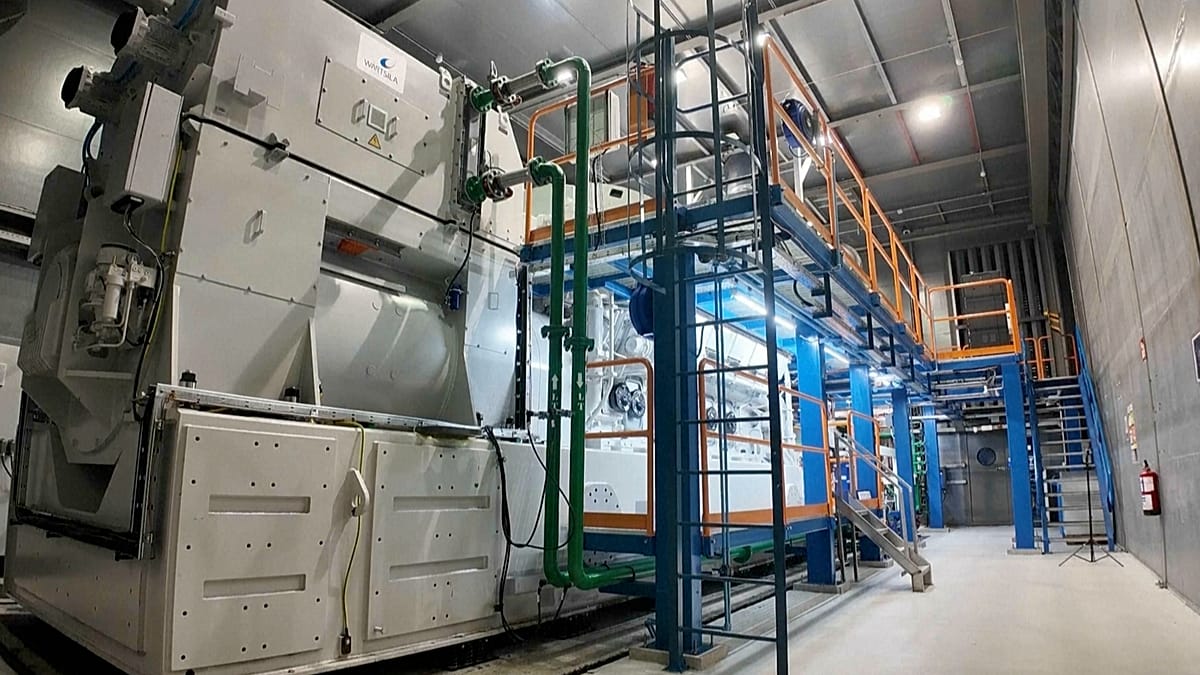
A giant hydrogen-powered engine has successfully supplied electricity to Spain's national grid in what its manufacturer says is a world first for large-scale power generation.
Why it matters: Hydrogen power is currently a thermodynamic money pit that competes for the subsidies your BESS projects actually need to pencil out.
Let’s stop clapping for every 'world first' that comes out of a PR department and look at the physics. While the press is swooning over a hydrogen engine in Spain, anyone who has ever calculated the Levelized Cost of Storage (LCOS) for a commercial PV project knows this is currently a thermodynamic nightmare. We are talking about taking green electrons, losing 30% in electrolysis, compressing the gas, transporting it, and then burning it in an internal combustion engine with a thermal efficiency that likely struggles to hit 40%. Compare that to the 85-90% round-trip efficiency of a standard LFP (Lithium Iron Phosphate) battery bank, and the business case for H2-to-power evaporates for anything other than seasonal storage.
The 'Ghost' of Gas Infrastructure
This isn't about helping solar installers; it’s a strategic 'Hail Mary' for the gas industry. Companies like Enagás and Naturgy are desperate to prove that their pipelines and turbines have a future in a post-carbon Spain. If you are a developer working on 50MW+ projects in Andalucía or Extremadura, your bottleneck isn't a lack of hydrogen engines—it's the Red Eléctrica (REE) grid connection queues and the lack of clear remuneration for BESS (Battery Energy Storage Systems). The Spanish PNIEC 2023 update targets 22GW of storage by 2030; that target will be met by batteries and pumped hydro, not by burning expensive gas in modified pistons.
If you're in the C&I space, don't let your clients get distracted by the hydrogen hype. Until we see green hydrogen at under €2/kg and carbon prices consistently north of €120/tonne, this technology is a niche play for heavy industry clusters like Huelva, not a viable solution for balancing the distributed solar grid.