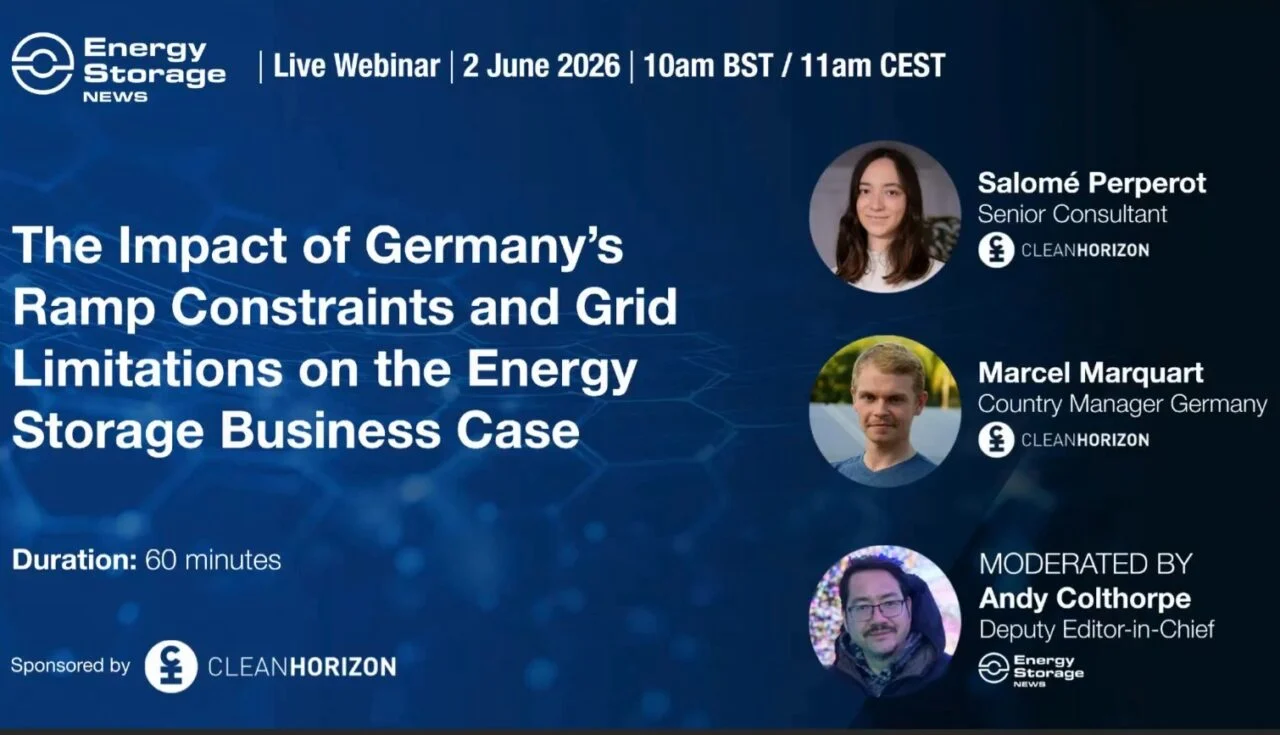
Energy-Storage.news presents this sponsored webinar with Clean Horizon, on how Germany’s grid connection agreements can affect the business case for battery storage projects.
Why it matters: A signed grid connection agreement in Germany is currently more valuable than the hardware; don't commit to a battery supply contract until the DSO confirms your capacity.
The Grid Slot is the New Gold
For years, European installers obsessed over the price per kWh of LFP cells. We chased 0.5% efficiency gains on inverters from SMA or Sungrow. But the game has moved. In the German market today, your CAPEX is irrelevant if your local DSO (Verteilnetzbetreiber) hands you a connection agreement that limits your feed-in or draw-down during peak hours. The era of 'unconstrained access' is dead, buried under the weight of an aging grid.
If you're developing C&I or utility-scale BESS in regions like Brandenburg or Bavaria, you aren't just an installer anymore; you're a grid negotiator. While everyone is celebrating the Solarpaket I, the reality on the ground is that DSOs like E.ON or Netze BW are becoming increasingly conservative. If you don't understand the nuance of your Netzanschlusszusage, you're building a stranded asset.
The Three Red Flags in Your Connection Agreement:The difference between a 12% IRR and a project that never breaks even is found in the fine print of a letter from Westnetz or E.DIS. If you’re pricing a project today without a signed connection agreement in hand, you’re not an engineer—you’re a gambler.