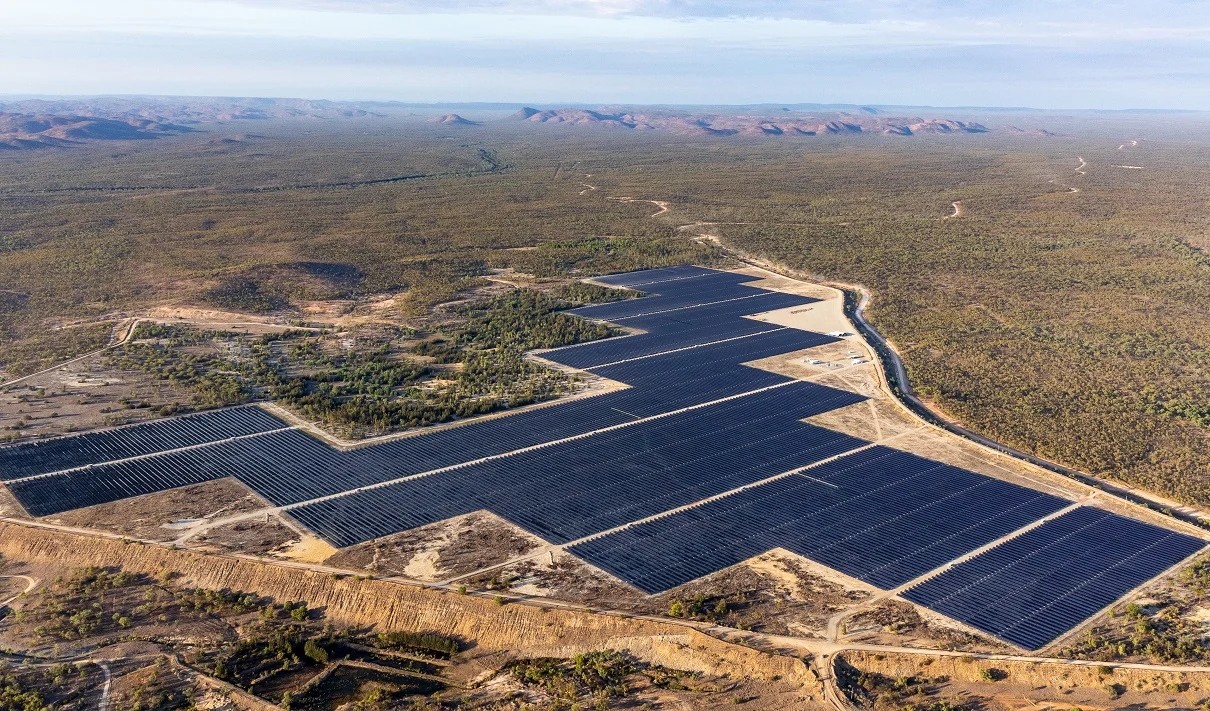
Brisbane-based developer Renewable Energy Partners (REP) has expanded the Bogunda Energy Hub to include solar PV and battery energy storage, with the project now formally in early-stage development south of Hughenden in Queensland, Australia.
Why it matters: Storage isn't an 'add-on' anymore—it's the only way to make large-scale solar projects bankable in a world of negative pricing and grid bottlenecks.
The Death of the 'Wind-Only' Dinosaur
On paper, a downgrade from 5GW to 1.85GW looks like a failure. In reality, it’s a masterclass in project survival that every developer from Brandenburg to Badajoz should study. Renewable Energy Partners (REP) realized what many European giants are still refusing to admit: nameplate capacity is a vanity metric; firming is the only thing the bank cares about in a saturated grid.
The 4-Hour Standard Arrives
Look at the math on this reconfiguration. We’re looking at 500MW of solar paired with a massive 2GWh BESS. That is a 1:4 solar-to-storage ratio. This isn't just 'adding a battery' to smooth out a few clouds; this is a shifted-energy plant designed to bypass midday price cannibalization entirely. In markets like the Netherlands or Spain, where captured prices frequently hit €0 during solar peaks, building 500MW of PV without this level of storage is effectively building a stranded asset. If your current C&I or utility-scale pipeline in Europe doesn't feature at least a 2-hour duration BESS, you aren't developing a power plant—you’re developing a liability.
The Grid Congestion Reality Check
The Bogunda project sits near the CopperString 2032 transmission corridor. This mirrors the 'SuedLink' struggles in Germany. You can have the best wind resource in the world, but if the transmission line can't handle the surge, your IRRs will evaporate under curtailment. By downsizing the total capacity but adding 2GWh of storage, REP is effectively 'right-sizing' for the grid's physical limits while maximizing the revenue per connection point. Lesson for the EU: Stop chasing massive land leases for 1GW+ wind farms that will never get a grid offer. Instead, focus on high-density hybrid hubs that play nice with existing 110kV or 220kV substations.