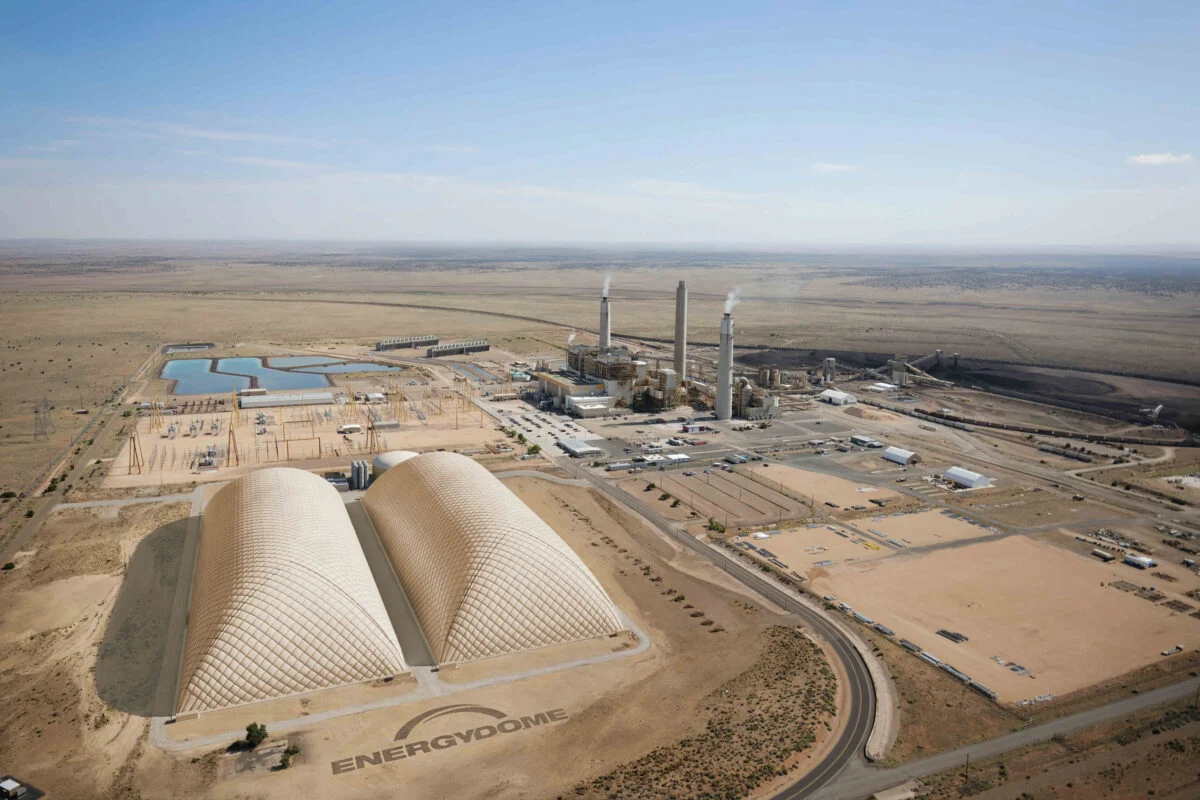
Energy Dome is advancing a 10-hour CO2 Battery project in Arizona, with SRP and Google, while Invinity announces the sale of North America’s largest VRFB, in California.
Why it matters: The 'storage' market is splitting: Lithium for short-duration bursts, and LDES for firming PV—ignore the latter and you'll be priced out of the next generation of utility tenders.
If you are still drafting utility-scale or heavy C&I proposals using exclusively Lithium Iron Phosphate (LFP) for 8+ hour durations, you are building on a technical dead-end. The news of Google and SRP backing Energy Dome’s CO2 battery in Arizona isn't just a pilot; it’s a signal that the world’s most sophisticated energy buyers are tired of the lithium-ion degradation curve and the fire-suppression headaches that come with it.
The 10-Hour Threshold: Why Lithium Fails the Math
Lithium-ion is a sprinter. It’s perfect for frequency regulation and 2-hour peaks. But once you move into the 10-hour territory required for 24/7 carbon-free energy (CFE), the CAPEX for lithium scales linearly, and the round-trip efficiency gains are eaten alive by the massive HVAC loads needed to keep those cells from cooking in the desert. Energy Dome, an Italian-born firm, uses a thermodynamic cycle involving the compression and expansion of CO2. For a European developer, the takeaway is clear: this tech was birthed in Milan and piloted in Sardinia. It’s physically more robust for high-cycle environments than any electrochemical cell on the market.
Vanadium’s Revenge on the Supply Chain
The Invinity Energy Systems VRFB (Vanadium Redox Flow Battery) sale in California highlights the other half of the LDES pincer movement. While lithium prices fluctuate based on the whims of the EV market, Vanadium is a byproduct of steel slag. More importantly, VRFB electrolytes don’t degrade. You can cycle them 20,000 times over 25 years without the 20% capacity fade that ruins your 15-year ROI projections on a standard containerized LFP solution. If you're bidding on projects in high-ambient-temperature regions like Andalusia or Sicily, the thermal stability of a VRFB vs. the thermal runaway risk of lithium isn't just a safety feature—it's a massive insurance premium reduction.