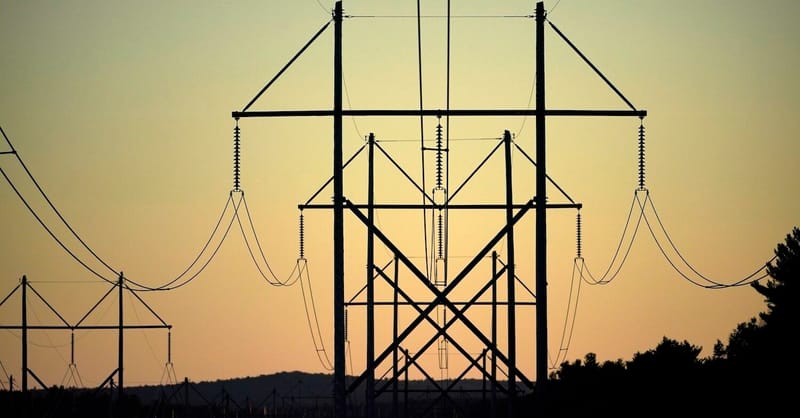
When the New England Clean Energy Connect transmission line started carrying electricity from Canada into Maine in January, supporters hailed the project as a triumph for renewable power.
Why it matters: Massive transmission projects are failing to deliver quick wins, making local, behind-the-meter solar the only reliable path to price stability for your clients.
For years, the European Commission and ENTSO-E have preached the gospel of the 'Supergrid'—the idea that if we just build enough massive DC interconnectors, we can balance the continent's intermittent renewables with distant baseload. The New England Clean Energy Connect (NECEC) was the poster child for this strategy in the US, promising 1,200 MW of Canadian hydro to stabilize the Northeast. But as the early operational data suggests, 'big pipe' solutions are increasingly becoming a liability rather than an asset.
The Permitting Trap
While Brussels bureaucrats dream of cables connecting the North Sea to the Alps, the reality is a decade of litigation, NIMBYism, and ballooning CAPEX. For a project developer in Germany or Poland, the NECEC saga is a cautionary tale. While the big utilities were fighting in court over Maine's forests, distributed solar plus storage could have been deployed ten times over at the grid's edge. We are seeing the same friction with Germany’s SuedLink; when these massive projects stall or underperform, the local grid experiences volatility that only decentralized PV can hedge against.
The Redispatch Reality
In Europe, redispatch costs are the 'hidden tax' on our slow-moving transmission build-out, costing German consumers over €4 billion annually. If New England’s hydro imports don't immediately crash the merchant price, it proves that long-distance transmission isn't the silver bullet for price stability. For the European C&I installer, this is your strongest selling point: Energy independence isn't just about geopolitics; it's about bypassing the physical and political bottlenecks of the high-voltage grid.
Every time a billion-euro interconnector underperforms or hits a permitting wall, the ROI for a local 500kWp rooftop system with a 1MWh BESS improves. Don't wait for the 'Supergrid' to lower your clients' bills—it likely won't arrive on time, or at the price promised.