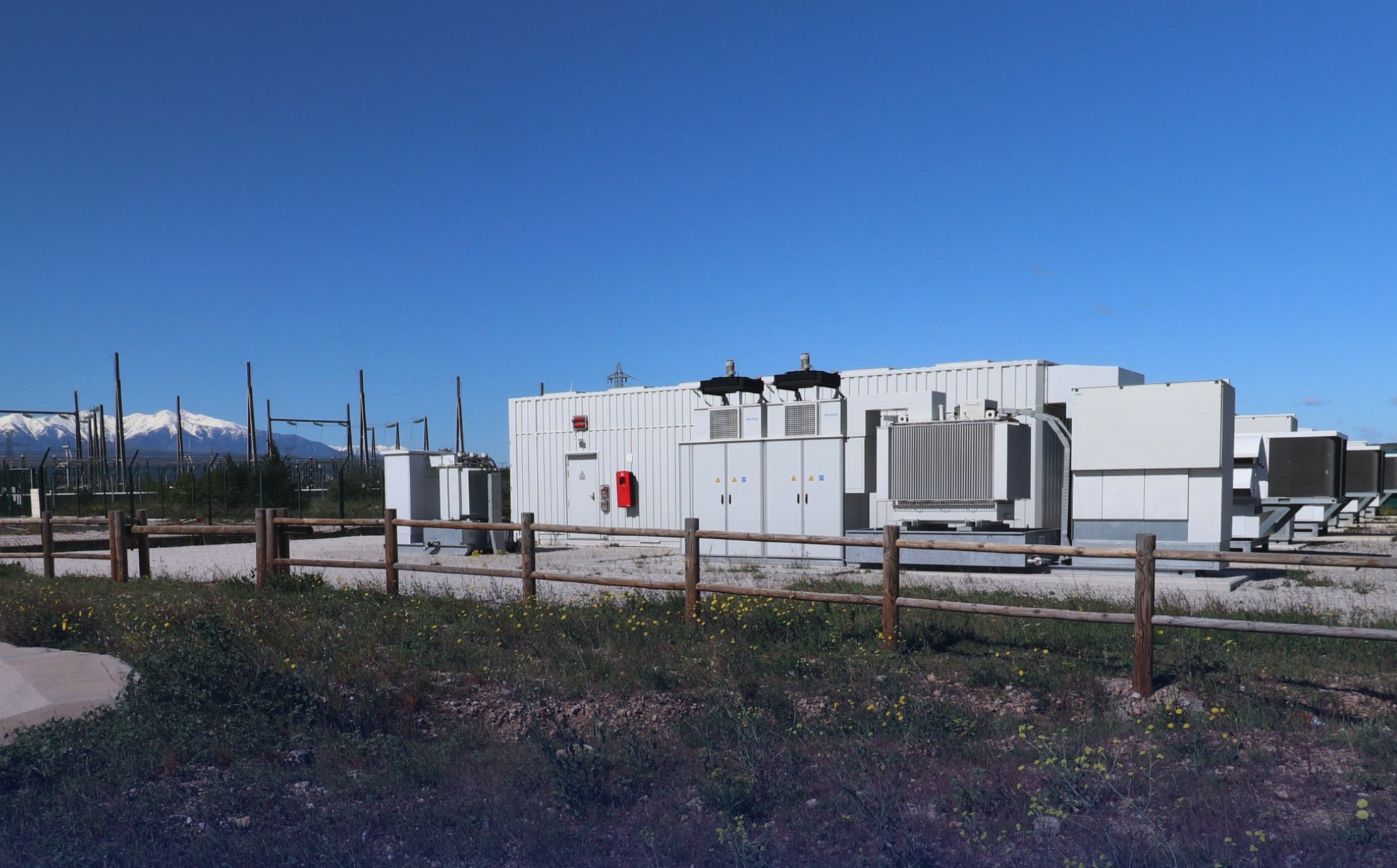
El primer proyecto de baterías de EDF en la Francia continental combina 20 MW de almacenamiento con baterías de ion-litio y 8 MW de energía hidroeléctrica para prestar servicios de respuesta rápida de frecuencia a la red de transporte eléctrico.
Why it matters: Standalone PV is becoming a race to the bottom; grid-service integration is the only way to protect your long-term margins in a saturated EU market.
The End of 'Dumb' Electrons
EDF isn't building a 20MW battery in the Pyrenees because they want to save the planet; they’re doing it because RTE (Réseau de Transport d'Électricité) is paying a premium for frequency stability that standalone solar simply can't provide. If you are a developer in Southern France or Spain still pitching pure-play PV without a sophisticated storage strategy, you are essentially selling a commodity into a saturated market. This project is a signal that the big players are pivoting from energy volume to energy flexibility.
By pairing 20MW of high-cycle Li-ion with 8MW of stable hydro, EDF has created a Virtual Power Plant (VPP) that can hunt for margins in the Frequency Containment Reserve (FCR) market. For a commercial installer working in the 500kW to 5MW range, the technical takeaway is profound: the battery handles the sub-second surges while the hydro provides the duration. It’s a 'fast-and-slow' architecture that maximizes asset life.
We saw this play out in the UK and German markets three years ago. The fact that EDF is now scaling this in mainland France suggests the 'merchant tail' of solar projects is getting shorter. If you aren't talking to your C&I clients about Energy Management Systems (EMS) that can talk to an aggregator like Next Kraftwerke, you're leaving 20% of the project's potential IRR on the table. Stop being a roofer with a high-voltage license and start being a grid-service architect.