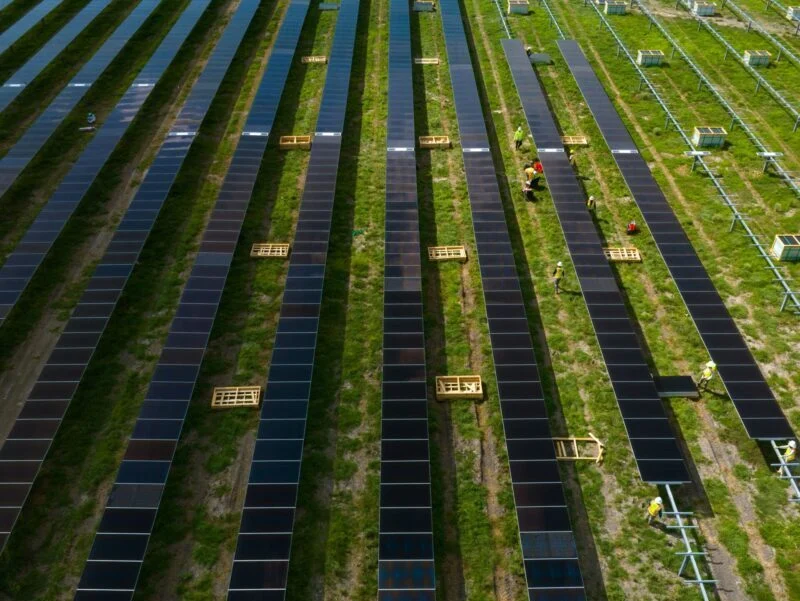
Developer Lightsource bp has reached financial close on the 171MWdc Glorit solar PV power plant, north of Auckland, New Zealand.
Why it matters: If you're still relying on merchant spot prices rather than solid PPA off-takers like Contact Energy, your project IRR is a fairy tale.
While some European developers are still licking their wounds from the price cannibalization bloodbath in Spain, Lightsource bp (LSBP) is quietly showing everyone how to de-risk a 100MW+ project in a high-renewables market. The 171MW Glorit project isn't just another notch on the belt; it’s a masterclass in the 'gentailer' partnership model that every developer from Lisbon to Warsaw should be studying.
The BP Factor
Now that BP has moved to 100% ownership of LSBP, the strategy has shifted from 'flip the project' to 'own the cash flow.' In New Zealand—a country where the grid is already 80% renewable thanks to hydro and geothermal—solar is the new kid on the block. LSBP isn't fighting for subsidies; they are partnering with Contact Energy, one of NZ’s big 'gentailers' (generator-retailers). This is the blueprint for survival in a post-subsidy Europe.
Why NZ is Your Crystal Ball
New Zealand’s market dynamics are a mirror for the future of the EU. When your grid is dominated by hydro (like the Nordics or parts of the Alps), solar serves as a strategic hedge. When the lakes are low, the sun is usually out. For an EPC or developer in Europe, the lesson is clear: Stop looking for government handouts and start finding off-takers who need a seasonal hedge. The Glorit project achieved financial close because it’s backed by a 100% power purchase agreement (PPA) with a partner that actually needs the electrons to balance their retail book.
If you're developing 50MW+ in Europe without a tiered PPA structure or a 'gentailer' style partner, you aren't a developer—you're a gambler. Lightsource bp just proved that even in a 'saturated' renewable market, there is massive money to be made if you solve the off-taker's volatility problem instead of just adding to it.