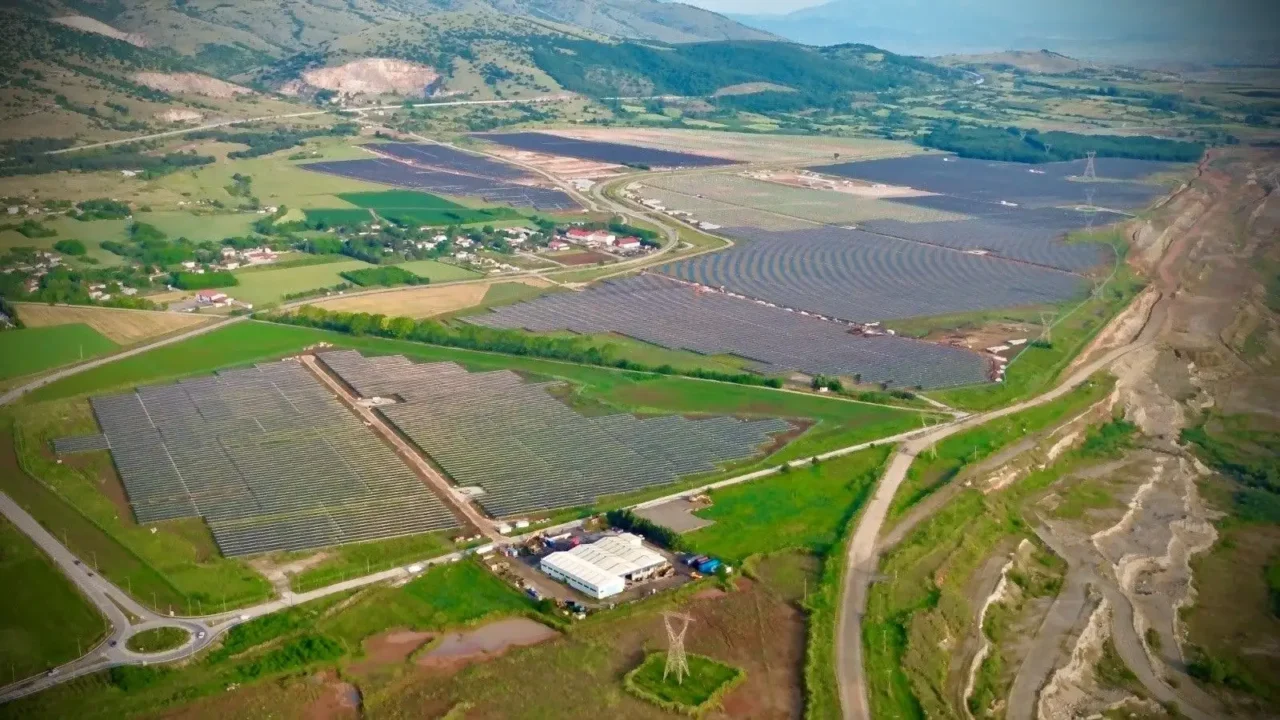
Solar PV solutions provider Nextpower has launched its redesigned NX Gemini two-in-portrait (2P) solar tracker.
Why it matters: 2P trackers save on piling and land but increase wind-risk and labor complexity—only spec this if your site's footprint or terrain leaves you no other choice.
For years, the industry gospel—largely preached by Nextracker itself—was that 1P (one-in-portrait) was the only way to fly if you wanted to avoid the structural nightmares of 'galloping' in high winds. But the launch of the redesigned NX Gemini 2P tells a different story: the battle for land efficiency in Europe is getting desperate. In markets like Italy, Germany, or the Netherlands, where you're fighting for every square meter of permitable land, the 2P configuration's ability to cram more modules onto shorter rows is no longer a luxury; it’s a survival tactic.
The Wind Load Reality Check
Let’s be honest about why 2P has a bad reputation among EPCs. We’ve all seen the drone footage of 2P arrays twisting like DNA strands during a storm because the torsional stiffness wasn't there. Nextracker is betting that their redesign—focusing on distributed drive systems and enhanced dampening—can finally silence the skeptics. If you're looking at a site with a 15% slope or soil that makes deep piling a cost-prohibitive nightmare, 2P becomes your best friend because it requires up to 50% fewer foundations than traditional 1P systems like the NX Horizon.
The Bifacial Bonus vs. Labor Costs
In short: Don't spec this just because it's the new shiny toy from a market leader. Spec it when your land cost is north of €5,000/hectare/year or your terrain looks like a crumpled piece of paper. Otherwise, the 1P stability we've relied on for a decade remains the safer bet for your IRR.