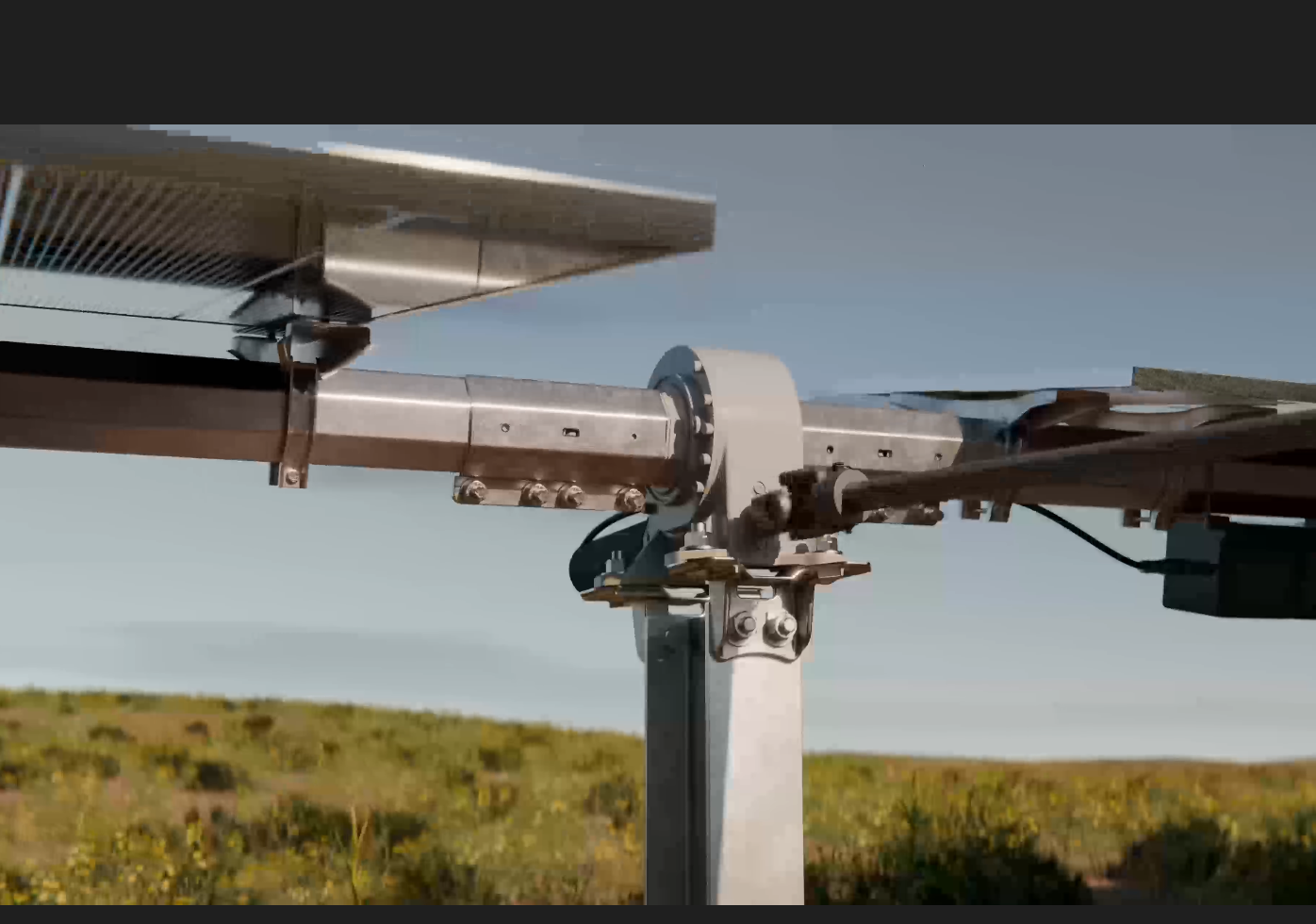
Array adapta al formato bífida su seguidor monofila Duratrack, e incorpora funcionalidades orientadas a mejorar la producción energética, reducir los costes de obra civil y aumentar la resiliencia operativa de las plantas fotovoltaicas.
Why it matters: Array is finally bringing 2P flexibility to their reliable drive system, giving European EPCs a way to cut foundation costs on tricky terrain without switching to less-proven brands.
For years, Array Technologies has been the high-church of the single-row, linked-row architecture. Their pitch was simple: one motor, hundreds of rows, fewer points of failure. It worked brilliantly in the flat deserts of the American Southwest, but as any EPC veteran in Extremadura or Puglia will tell you, the world isn't flat. The launch of the DuraTrack D2S is effectively Array admitting that their rigid 1P (one-in-portrait) legacy was hitting a ceiling in the European market.
The Death of the 'Flat Land' Monopoly
In the European context, where land is scarce and topographies are increasingly "sub-optimal," the dual-row (2P) configuration isn't just a preference; it's often a necessity to make the Ground Coverage Ratio (GCR) math work. By moving to a two-row format, Array is finally chasing the mechanical flexibility that European competitors like Soltec or PVH have used to eat their lunch on hilly sites. If you can reduce foundation counts by up to 30%—a common claim for 2P systems—you aren't just saving on steel; you're saving on the labor and specialized drilling rigs required for rocky Mediterranean soils.
The Bifacial Reality Check
We need to talk about the bifacial gain. While 1P systems are often touted for stability, 2P trackers generally offer a higher profile, which can be a double-edged sword. You get better backside diffuse radiation—crucial for those high-albedo sites—but you’re fighting significantly higher wind loads. Array claims increased "operational resilience," which is analyst-speak for "we hope this doesn't fly away in a Mistral wind." For installers, the real question is the stow angle. If this new D2S can't handle a 0-degree stow without vibrating itself to pieces (the dreaded aeroelastic instability), the O&M costs will eventually bury the initial CAPEX savings.
The Margin Angle: If you are an EPC bidding on a 50MW project in Spain, this hardware shift matters because it changes your pile-driving schedule. Fewer piles mean faster commissioning. But don't take the marketing at face value—ask for the wind tunnel reports specific to the D2S's dual-row profile before you bank on those reduced civil costs.