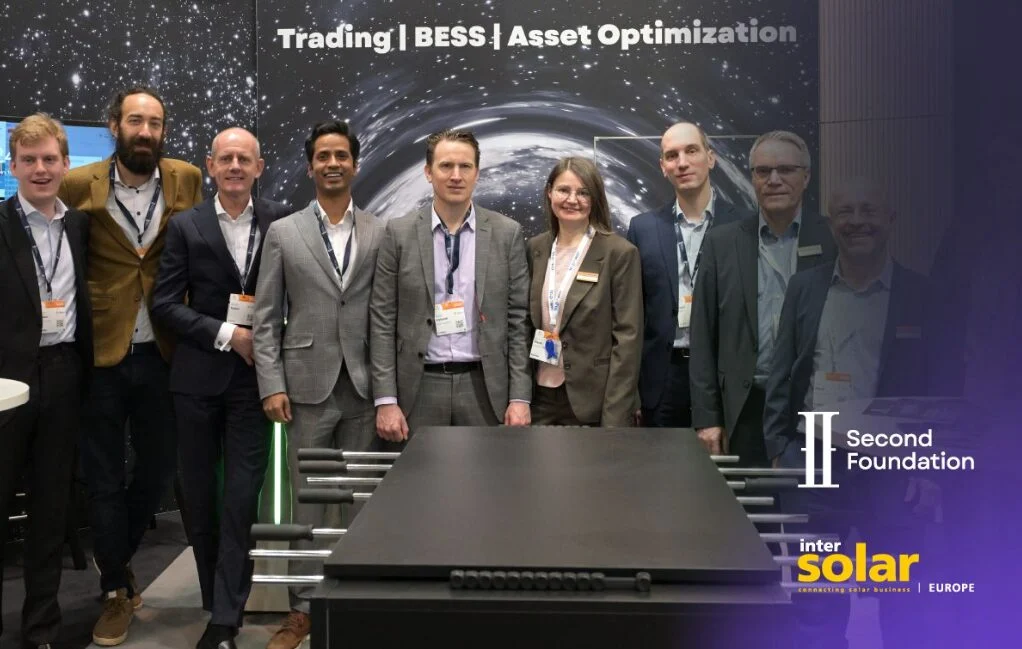
We chat to Stephan Lehrke, head of Germany at Second Foundation, a Czech Republic-headquartered energy asset trading firm which is becoming an owner-operator of BESS.
Why it matters: Stop selling BESS as a 'backup' and start selling it as a high-frequency trading terminal, or your C&I clients will find a developer who does.
The transition of Second Foundation from a pure-play trading house to an owner-operator in the German BESS market is the loudest signal yet that the hardware phase of the energy transition is over. We are now in the algorithmic era. If you are a developer in North Rhine-Westphalia or Bavaria still pitching projects based on simple spread arbitrage, you are selling a 2018 solution to a 2025 problem.
The Margin is in the Math, Not the Module
Why does a Czech trading firm want to own the batteries? Because they’ve realized that the real alpha isn’t in the EPC margin or the O&M contract—it’s in the sub-second decision-making between FCR (Frequency Containment Reserve) and aFRR (automatic Frequency Restoration Reserve). In Germany, the volatility on the intraday market is becoming so violent that a human operator is a liability. Second Foundation is betting that their proprietary trading stacks can squeeze an extra 15-20% IRR out of a project compared to a traditional utility like RWE or EnBW.
For the German installer, this means the conversation with the C&I client has changed. You can't just talk about cycles and depth of discharge anymore. You need to ask: "Who is your optimizer?" If the answer is a generic software package with no skin in the game, the project is a paperweight. Second Foundation moving into ownership proves that to win in BESS today, you must be a bankable trader first and an engineer second.