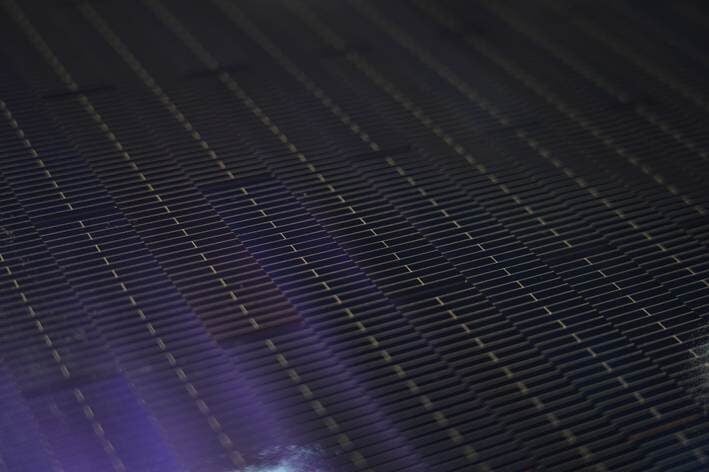
Oxford PV and Fraunhofer ISE have unveiled a module prototype that combines tandem perovskite-silicon and matrix shingle interconnection.
Why it matters: This technology is the only realistic way for EU-based manufacturing to out-compete Chinese TopCon on pure technical performance rather than just trade barriers.
We’ve been hearing the perovskite siren song for a decade, usually accompanied by lab-scale results that look great on a slide deck but disintegrate the moment they see a cloud. However, this collaboration between Oxford PV and Fraunhofer ISE isn't just another press release; it’s a necessary pivot toward module architecture that can actually survive a 25-year warranty in the German rain.
The Physics vs. The P&L
The industry is currently cannibalizing itself. With standard TopCon modules hitting 22-23% efficiency and prices dropping below €0.12/Wp, the only way for a European installer to maintain margins is to sell yield density. If Oxford PV can successfully scale this 25%-efficient tandem module out of their Brandenburg facility, they give you a product that justifies a premium price point. You stop selling generic hardware and start selling a technology that captures more photons per square meter than anything coming off a boat from Ningbo.
Why Matrix Shingling is the Secret Sauce
The move to matrix shingle interconnection is the real field engineer's win here. Tandem cells are notorious for being finicky about current matching and heat. By using shingled cells instead of traditional busbars, Oxford PV is doing three things:
The Reality Check
Don't clear your warehouse just yet. The prototype is a 435W-equivalent module, which is respectable but not revolutionary in terms of raw power. The real hurdle remains bankability. Until Munich Re or similar insurers give these perovskite layers a green light on degradation rates, your C&I clients won't touch them for 10MW+ projects. This is currently a residential play for the 'early adopter' homeowner who wants the highest tech on the block, regardless of the price per watt.