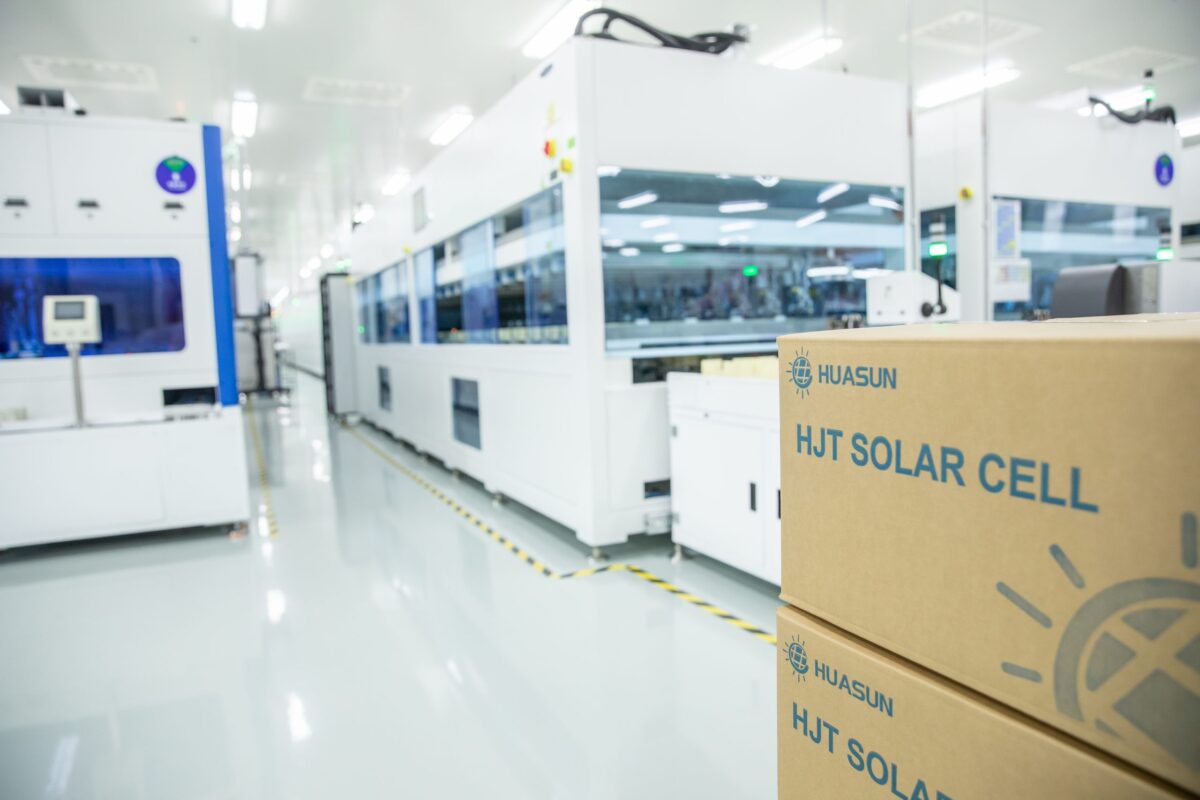
Huasun Energy will launch its Himalaya PLUS HJT module in Europe at next week’s Intersolar industry event.
Why it matters: HJT offers a superior temperature coefficient that makes it the technical winner for high-heat European regions, provided the price premium doesn't kill your upfront ROI.
For years, Heterojunction (HJT) has been the 'perpetual bridesmaid' of solar technology—always promising, always efficient, but always too expensive compared to the brutal scale of PERC and now TOPCon. Huasun bringing the Himalaya PLUS to Munich isn't just another product launch; it’s a direct challenge to the dominance of Jinko and LONGi’s n-type lineups. If you’re an installer in the DACH region or the Benelux, you need to look past the marketing 'PLUS' and focus on the temperature coefficient.
The PPA Math in Southern Europe
While HJT’s 23%+ efficiency looks good on a datasheet, the real money is made in the heat. HJT typically boasts a temperature coefficient of -0.26%/°C or lower, compared to TOPCon’s -0.29%. On a 40°C day in Seville or even a surprisingly hot summer in Brandenburg, that delta adds up to a 2-3% yield advantage. For a 10MW PPA-backed project, that’s the difference between a healthy IRR and a lender's headache. Huasun is betting that European developers are finally ready to pay the 'HJT premium' for that long-term stability.
Bankability vs. Performance
We saw Meyer Burger struggle to make the HJT math work at scale in Europe, eventually pivoting toward the US. Huasun doesn't have that luxury; they have to win on volume. My concern for installers isn't the tech—HJT is objectively superior in terms of bifaciality and degradation—it’s the long-term support. When you’re committing to a 30-year asset, you aren't just buying a module; you’re buying the manufacturer's balance sheet. Huasun is scaling fast, but they are fighting a price war where the incumbents have much deeper pockets. If you're spec'ing these for C&I, ensure your O&M contracts account for the specific cleaning requirements of high-bifaciality glass-glass modules, which the Himalaya series leans into heavily.