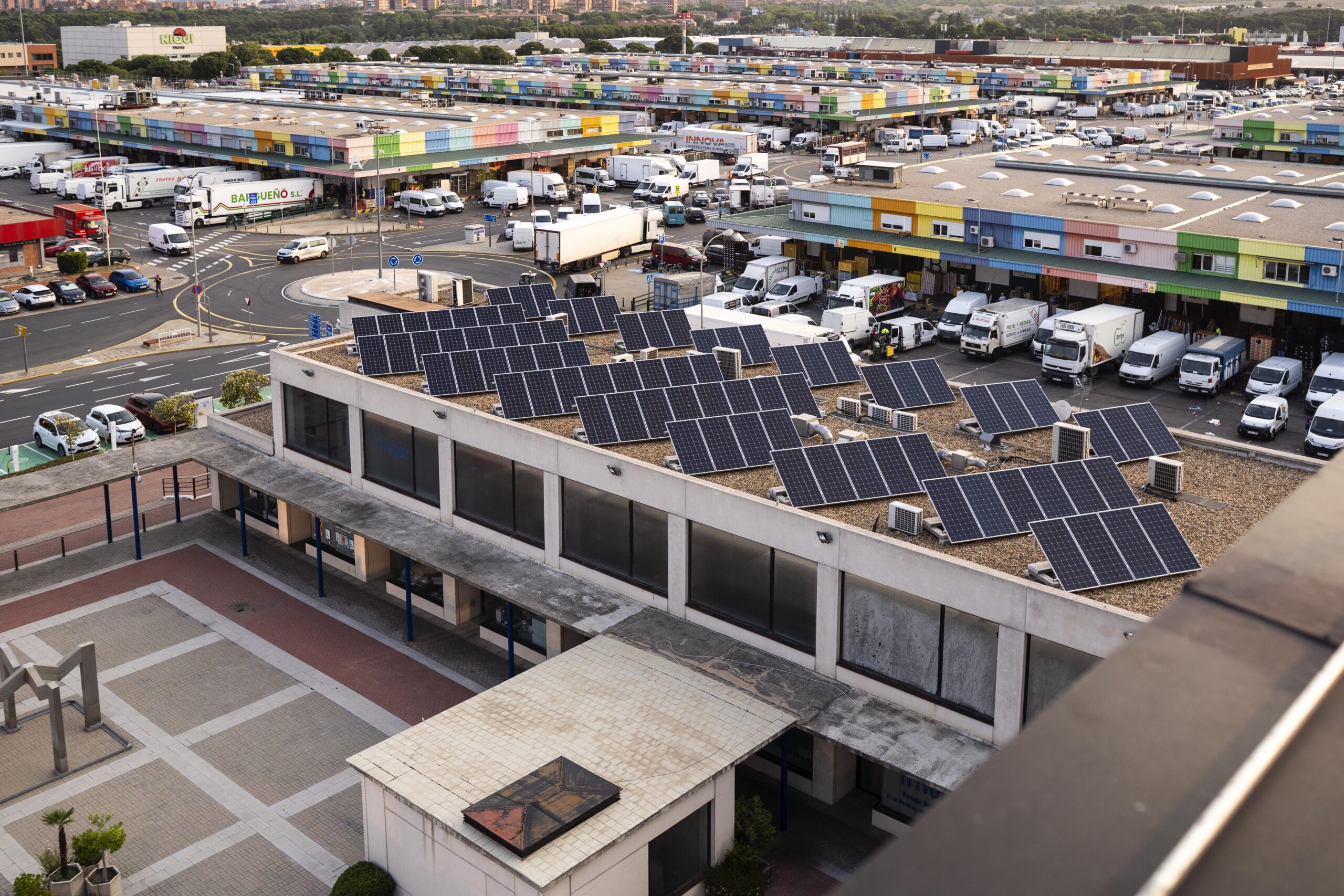
Mercamadrid ha incorporado dos nuevas instalaciones fotovoltaicas que suman una potencia de 300 kWp... alcanzando los 660 kWp. Además, prevé la instalación de otros 700 kWp en el Mercado Central de Pescados.
Why it matters: If your C&I clients think a few hundred kilowatts is 'energy independence,' they are critically under-investing and leaving millions in long-term savings on the table.
Mercamadrid covers 222 hectares. It is one of the largest food logistics hubs in the world, feeding 12 million people. And yet, the industry is supposed to applaud a cumulative 660 kWp? Let’s be blunt: for a site dominated by massive, energy-hungry cold chains, this is a timid first step that highlights a recurring pathology in Spanish C&I solar: The Fear of the Roof.
The Scale Mismatch
A single large-scale cold storage warehouse can easily pull several megawatts during peak cooling hours. In the scorching Madrid summer, a total capacity of 1.3 MW (even after their planned expansion at the Fish Market) is a rounding error on Mercamadrid’s total OPEX. If you are a developer pitching these hubs, you need to move past the 'green credentials' and start talking about hedge ratios.
A War Story for Installers
We’ve seen this pattern before with large municipal entities. They tender small to 'test the waters,' the system performs well, and then they realize they wasted two years of potential savings by not going big from day one. Your job isn't to bid on these 300 kWp scraps; it's to present the 10-year cash flow model that proves a 3MW system with a 2MWh battery is the only way to protect their margins against the volatility of the Iberian pool price.