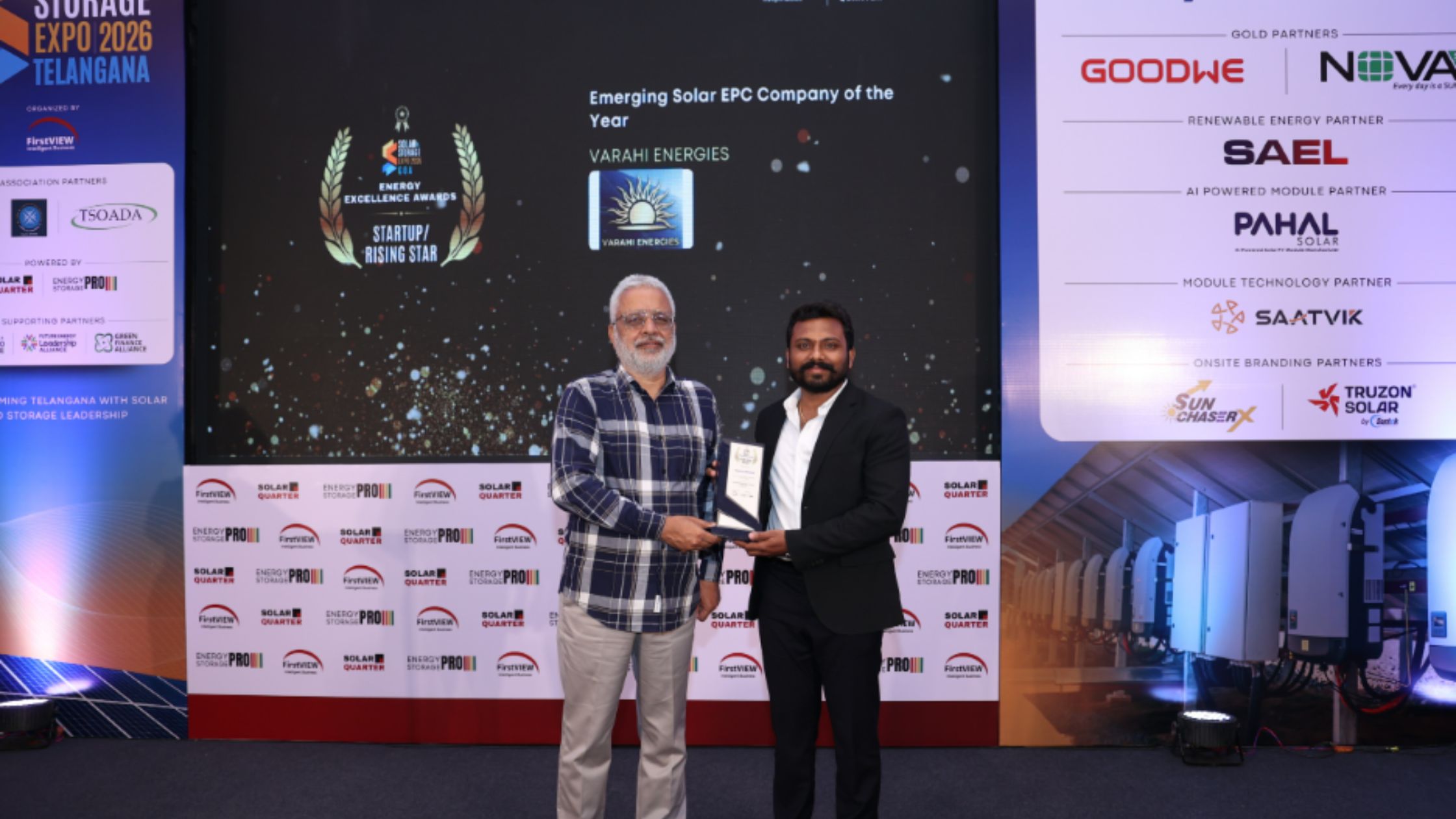
Varahi Energies was awarded the Emerging Solar EPC Company of the Year at the Telangana Energy Excellence Awards 2026 for its exceptional growth and contribution to solar energy adoption.
Why it matters: Regional EPC success in India highlights a high-speed, low-margin operational model that will eventually reset global expectations for installation costs.
Let’s be blunt: a regional award in India doesn’t help you navigate a grid congestion nightmare in the Netherlands or a bureaucratic permit delay in Italy. On the surface, Varahi Energies winning a trophy in Telangana is a local PR win. But for the European professional, the signal here isn’t the award—it’s the velocity. While we in the EU are often bogged down by 18-month permitting cycles and the intricacies of the RED III directive, Indian EPCs are operating in a high-pressure cooker where speed and volume are the only ways to survive razor-thin margins.
The Lean EPC Playbook
In regions like Telangana, the EPC model is stripped to its bones. We’re seeing a level of operational efficiency that makes the average German installer look bloated. These "emerging" players aren't just installing panels; they are perfecting a procurement-first strategy. They aren't waiting for a preferred distributor to call them back; they are dealing with Jinko or LONGi at a scale that dictates terms. If you want to know why your hardware costs aren't dropping as fast as the spot price suggests, it's because firms in these growth corridors are gobbling up the supply at the source.
The War Story Angle
I’ve seen this pattern before. We saw it with the rise of Chinese Tier-1 manufacturers a decade ago. First, they dominate a massive domestic market, then they export the perfected, low-cost methodology. For a C&I developer in Spain or Poland, the threat isn't Varahi Energies opening an office in Madrid next week. The threat is the commoditization of the EPC role. When 'Emerging EPCs' prove that solar can be a high-speed, low-margin utility service, it puts pressure on European firms to justify their premium pricing through 'added value' like BESS integration or advanced O&M contracts.