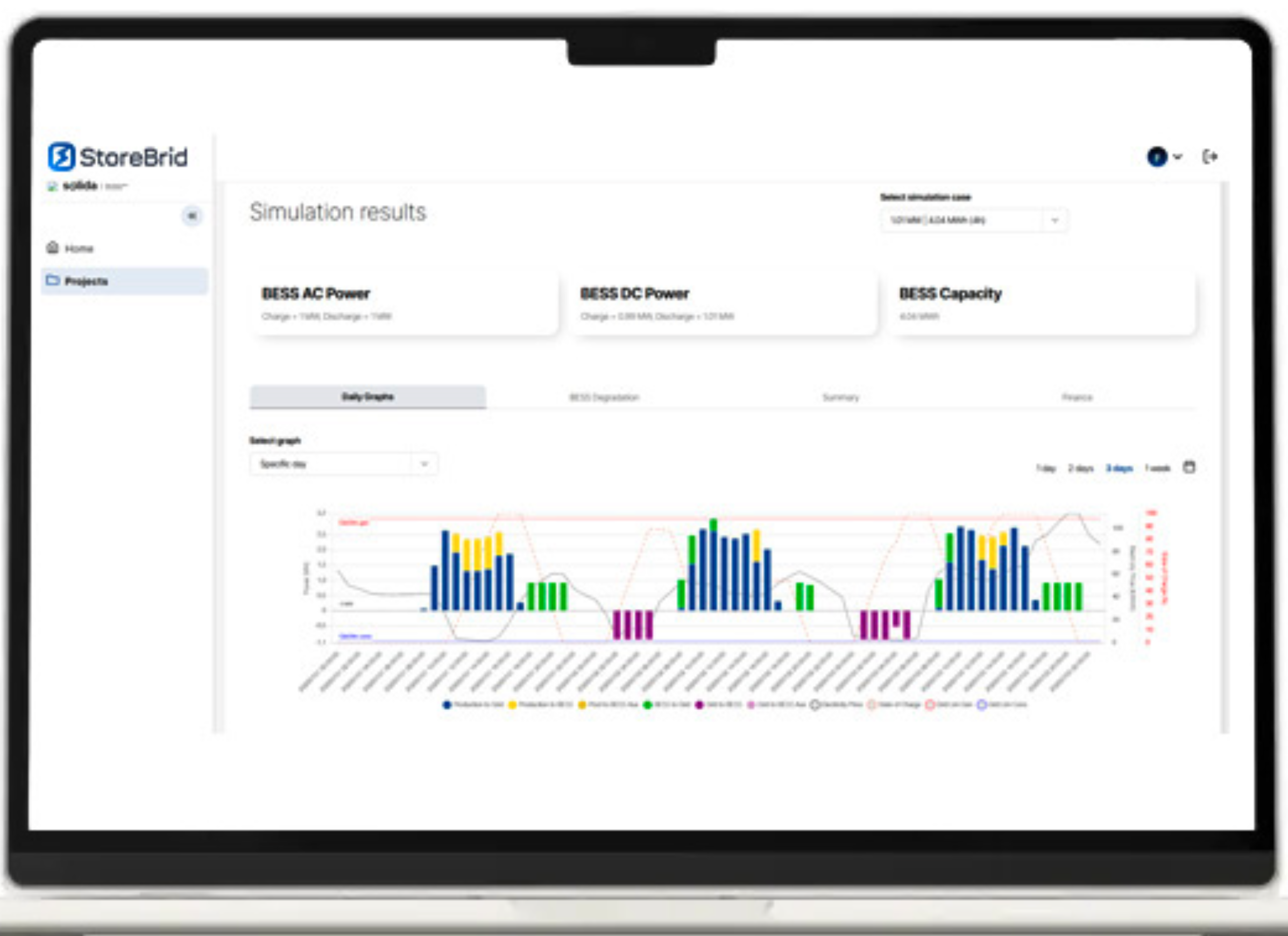
La española Sunveon presenta StoreBrid, su plataforma SaaS para modelizar proyectos BESS standalone e híbridos conectando supuestos técnicos, operativos y financieros de forma trazable y transparente.
Why it matters: If you can't prove the ROI of a 4-hour battery to a skeptical CFO using transparent data, your C&I project will never leave the PowerPoint phase.
If I see one more "proprietary" Excel model for a 20MW BESS project that treats battery degradation as a flat 2% annual linear drop, I’m going to retire early. We’ve reached the point in the European energy transition where "napkin math" is actively losing people money. Sunveon’s launch of StoreBrid isn't just another SaaS rollout; it’s a symptom of a market that is finally maturing beyond the 'solar-only' mindset.
The "Black Box" Problem in Storage
The reality for installers and developers in markets like Spain or the Netherlands is that arbitrage is a moving target. You aren't just selling hardware; you're selling a complex financial instrument that happens to be made of lithium. Banks are currently terrified of BESS because the revenue stacking—combining wholesale arbitrage with frequency restoration reserves (like aFRR)—is a nightmare to audit. If StoreBrid can actually provide the "traceable and transparent" link between technical cycles and financial IRR, it solves the biggest bottleneck in the current EU storage pipeline: Bankability.
For the EPCs and developers reading this: your value is shifting from 'how fast can you bolt panels to a roof' to 'how accurately can you predict the performance of a 2-hour LFP rack over 15 years.' If you aren't using professional modeling tools to justify your Capex, you're bringing a knife to a gunfight in the next round of capacity auctions.