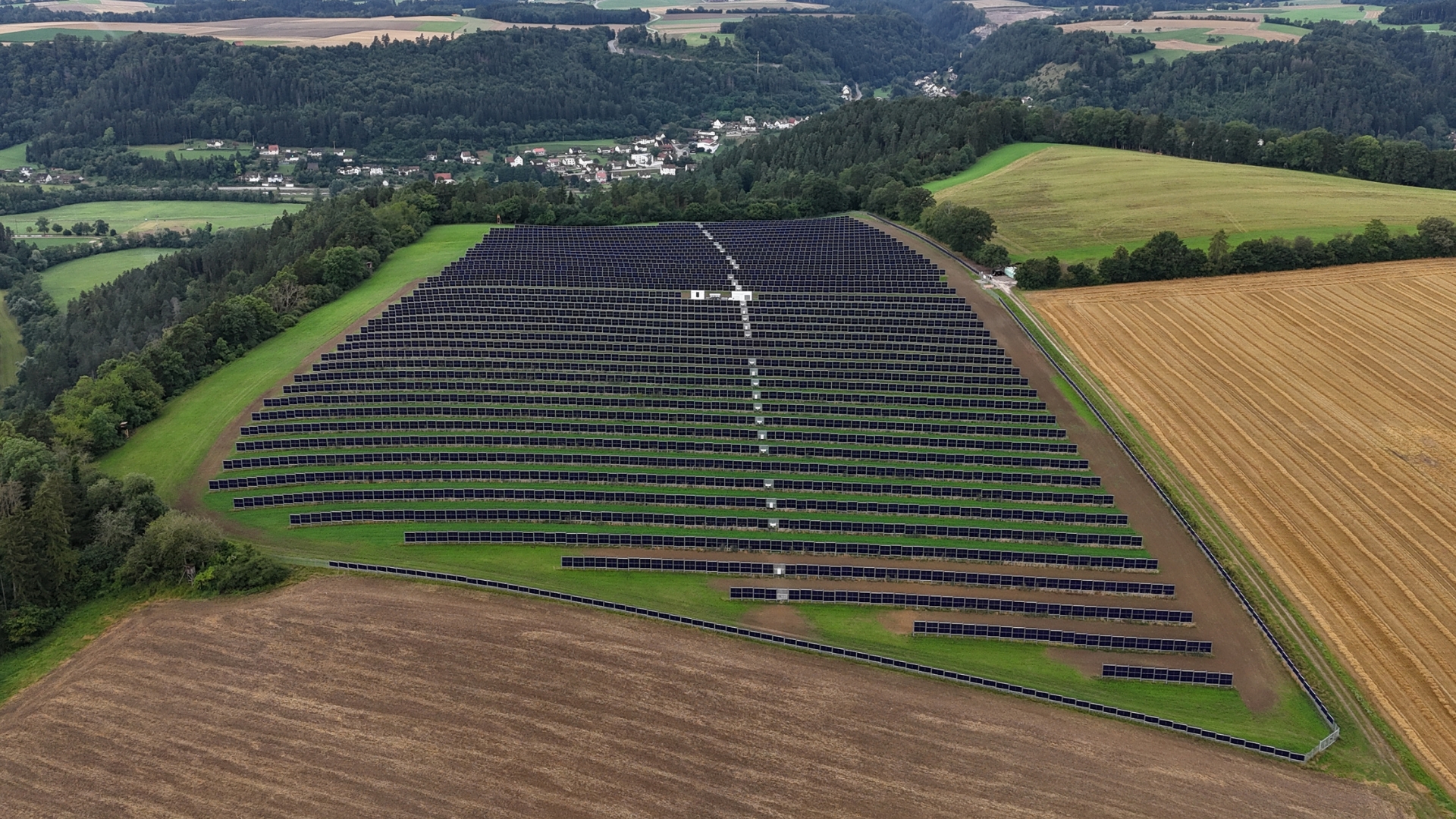
El sistema ha sido desarrollado específicamente para proyectos de gran escala y no es necesario usar módulos fotovoltaicos optimizados para configuraciones verticales, pues también admite módulos estándar disponibles en el mercado; pero sí requiere módulos de alta potencia, superiores a 700 Wp.
Why it matters: Vertical bifacial is transitioning from an Agri-PV niche to a grid-balancing tool that uses high-power G12 modules to finally make the CAPEX math work.
For years, vertical bifacial PV has been the 'Agri-PV' darling—great for press releases with sheep, but a headache for LCOE-focused developers. Next2Sun’s launch of the Fields2Sun Max is a calculated pivot away from boutique agriculture and toward the brutal reality of utility-scale economics. By mandating modules above 700 Wp, they are signaling the end of the 450W niche module era for vertical systems.
The G12 Arms Race Comes to Vertical
This isn't just about 'more power.' By requiring 700Wp+, Next2Sun is forcing developers into the G12 wafer ecosystem (think Trina Solar’s Vertex or Risen’s Titan series). In the vertical world, your racking-to-watt ratio is everything. If you’re using standard 500W modules, your labor and steel costs per MWp are bloated. Moving to 700W+ n-type TOPCon bifacials allows a developer to slash the number of mounting posts and foundation points, which is where vertical projects usually bleed cash.
The 'Anti-Duck' Profile
Why should a developer in Spain or Germany care? It’s about the cannibalization of midday prices. While every horizontal tracker-based plant in Iberia is driving spot prices to zero at 14:00, vertical systems produce their peaks in the morning and late afternoon. In markets like the Netherlands or Poland, where grid congestion is a nightmare, a vertical profile can often secure a grid connection where a standard 'South-facing' array is rejected.
A Word of Warning on Wind Loads
From a field engineer's perspective: 700Wp modules are massive (often 2.4 meters tall). When you stand those up vertically, they aren't just solar panels; they are sails. If you’re spec’ing this for a project in a high-wind zone like the Rhone Valley or the North Sea coast, your geotechnical survey better be flawless. I’ve seen 'standard' racking twisted like pretzels because the installer underestimated the lateral torque on the pilings. If you’re moving to the 'Max' scale, don't cheap out on the ramming depth.