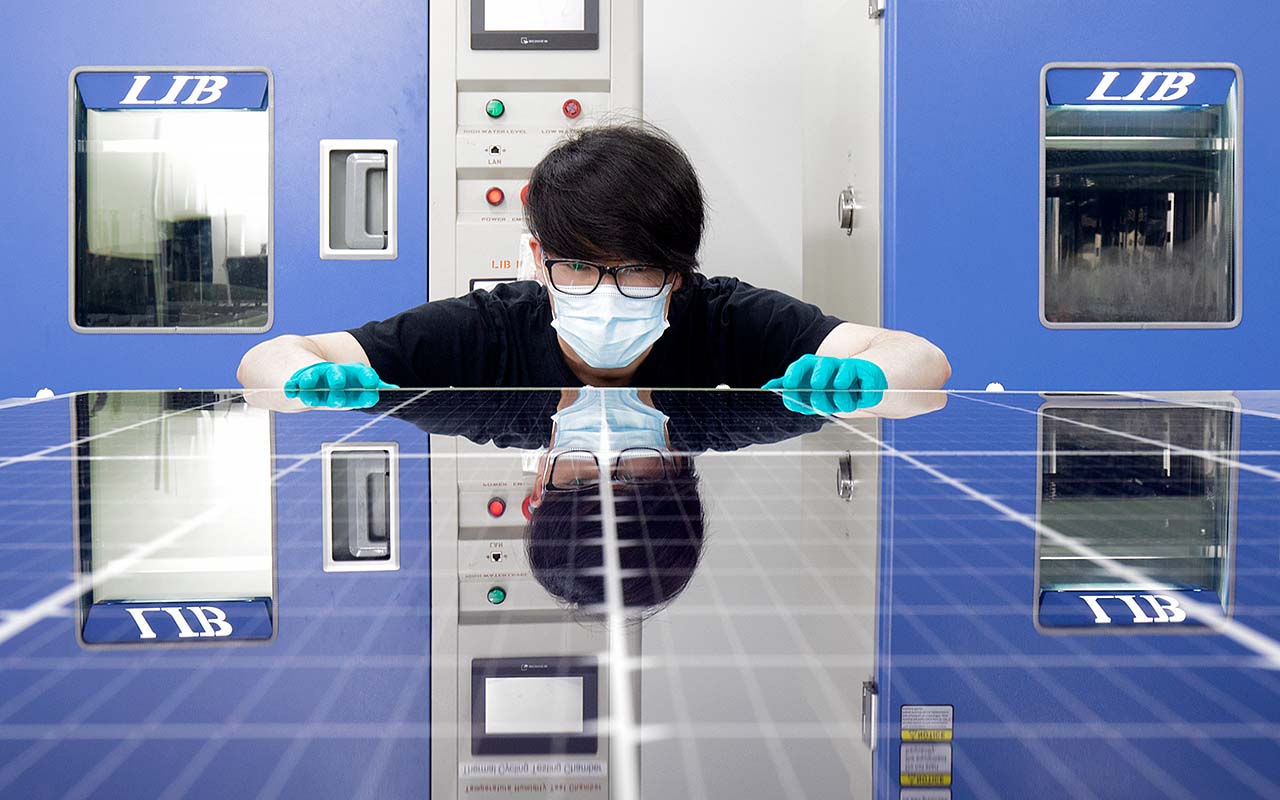
The Australian Renewable Energy Agency (ARENA) has committed an additional AU$95.4 million (US$66.8 million) in funding to the Australian Centre for Advanced Photovoltaics (ACAP), extending the research programme's operations to 2033.
Why it matters: The tech being funded here today determines whether the modules you sell in five years will hit 25% or 30% efficiency—and how fast they’ll degrade in the field.
If you think Australian solar news is just about kangaroos and residential batteries, you’re missing the engine room of the global PV industry. The Australian Centre for Advanced Photovoltaics (ACAP), led by the University of New South Wales (UNSW), is essentially the cradle of the PERC technology currently sitting on 90% of the roofs you’ve commissioned in the last five years. When the Australian government drops AU$95.4 million to keep this lab running until 2033, they aren't just funding academics; they are subsidizing the next decade of your product roadmap.
The IP Pipeline to Europe
European installers are currently caught in a brutal margin squeeze between Chinese manufacturing giants like Jinko and LONGi. But here’s the reality: those manufacturers are essentially scaling IP that often originates in Sydney. This funding extension focuses heavily on tandem cells (perovskite-on-silicon) and ultra-high efficiency architectures. For a developer in Germany or a project lead in Spain, this is your early warning system. We are hitting the theoretical limits of single-junction silicon. The modules you’ll be quoting in 2027 will likely be the commercialized fruit of this specific AU$95M investment.
Watch the O&M Angle
Beyond just efficiency, ACAP is pivoting toward 'photovoltaic performance and reliability.' This is where the money is for European O&M providers. We’ve all seen the premature degradation issues in some of the cheaper 550W+ bifacial modules hitting the market lately. ACAP’s research into light and elevated temperature-induced degradation (LeTID) is the only reason we have reliable warranties today. As they shift focus to recycling and circularity, pay attention. EU regulations like the WEEE Directive are getting teeth; the technical solutions for cost-effective panel recycling will likely be tested at ACAP before they reach a plant in Rotterdam.