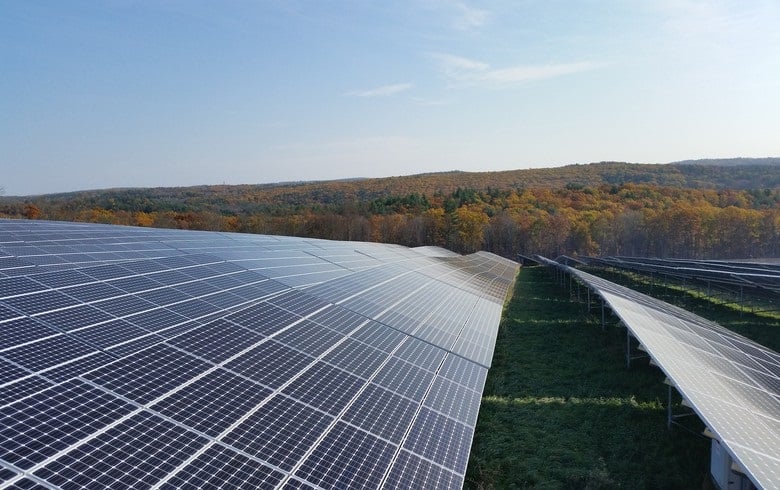
The Solar Energy Industries Association has launched an interactive map showing that solar development occupies only 0.07% of US farmland.
Why it matters: The 'food vs. fuel' debate is hardening into restrictive laws like Italy's DL Agricoltura; start pivoting your C&I and utility pitches to dual-use Agri-PV now or watch your permitting success rates crater.
SEIA is playing a defensive game of 'look at the map,' but European developers know that logic rarely wins a land-use fight. While the US can brag about decimal points, we are facing a far more aggressive regulatory squeeze. In Italy, the recent DL Agricoltura has effectively banned ground-mounted PV on areas classified as agricultural land, regardless of how 'small' the footprint is. If you walk into a town hall in Lombardy or Bavaria with a map showing that solar takes up less than 1% of the continent, you’ll be laughed out of the room by local cooperatives and heritage protection groups.
The Pivot to Dual-Use or Death
The 0.07% figure is a vanity metric. What matters for your pipeline isn't the aggregate land use, but the political cost per hectare. In Germany, the EEG 2023 has already signaled the shift by carving out specific sub-quotas and higher tariffs for Agri-PV. We’re moving past the 'land competition' era and into the 'forced synergy' era. If your project doesn't allow a tractor to pass under the modules or sheep to graze between the rows, it’s increasingly a non-starter.
The Margin Trap
Don't be fooled by the 'plenty of space' argument. As land becomes restricted, lease rates for 'safe' plots are skyrocketing. I’ve seen developers in the Netherlands paying €5,000+ per hectare annually, which obliterates the ROI on standard PPA models. Your strategy shouldn't be proving that solar uses 'very little' land; it should be proving that your system makes that land 30% more profitable for the farmer. Use the SEIA data as a talking point, but build your business case on Netafim irrigation integration or tracking systems that accommodate specific crop heights.