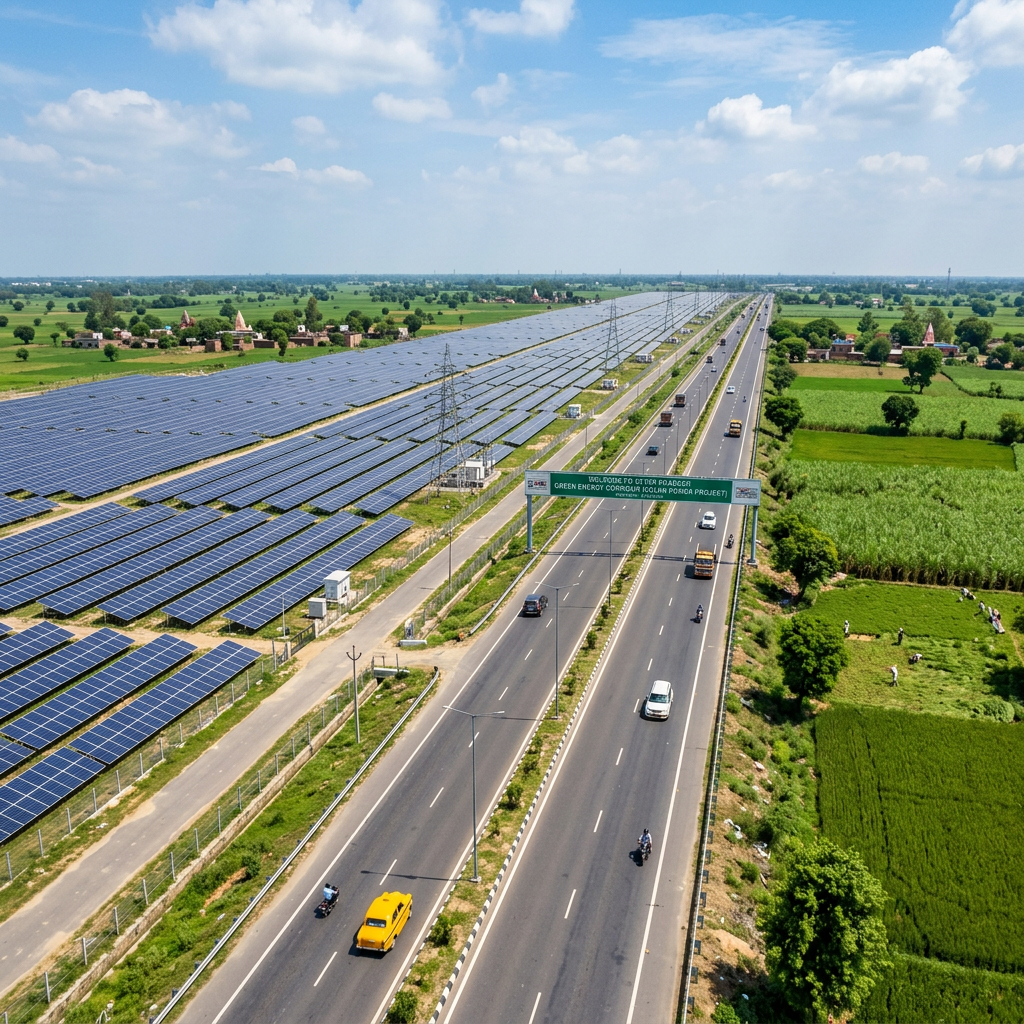
This initiative will enhance power transmission infrastructure to achieve 22,000 MW of solar capacity.
Why it matters: Massive Indian grid expansions will compete for the same global transformer and inverter stock you need for your 2025 C&I projects.
While European developers are currently drowning in a sea of grid-connection delays—with some projects in Poland and Germany facing five-year wait times—Uttar Pradesh (UP) is providing a masterclass in the 'Grid-First' playbook. By committing ₹5,400 crore (roughly €600 million) to the Green Energy Corridor-II, they aren't just building solar; they are building the plumbing to ensure those 22 GW of electrons actually have somewhere to go.
The Supply Chain Vacuum
For a solar pro in the Netherlands or Spain, this isn't just a distant infrastructure project. It’s a demand signal. A 22 GW target in a single Indian state will act as a massive vacuum for global Tier-1 inverter and transformer supply. If you’re wondering why lead times for high-capacity string inverters from the likes of Huawei or Sungrow aren't dropping as fast as module prices, look no further than these mega-corridors. India is increasingly competing for the same balance-of-system (BOS) components that European C&I installers need for their 2025 pipelines.
The 'Bundelkhand' Lesson for Europe
The focus on the Bundelkhand region highlights a specific strategy: centralized transmission for decentralized generation. European policy often tries to force solar into existing, creaking grids. In contrast, the GEC-II model builds the highway before the cars arrive. We’ve seen this pattern before in Australia’s Renewable Energy Zones (REZs). For European project developers, the takeaway is clear: stop scouting for high-irradiance land and start scouting for the 'Corridors.' In the current market, grid capacity is a more valuable asset than sunlight.