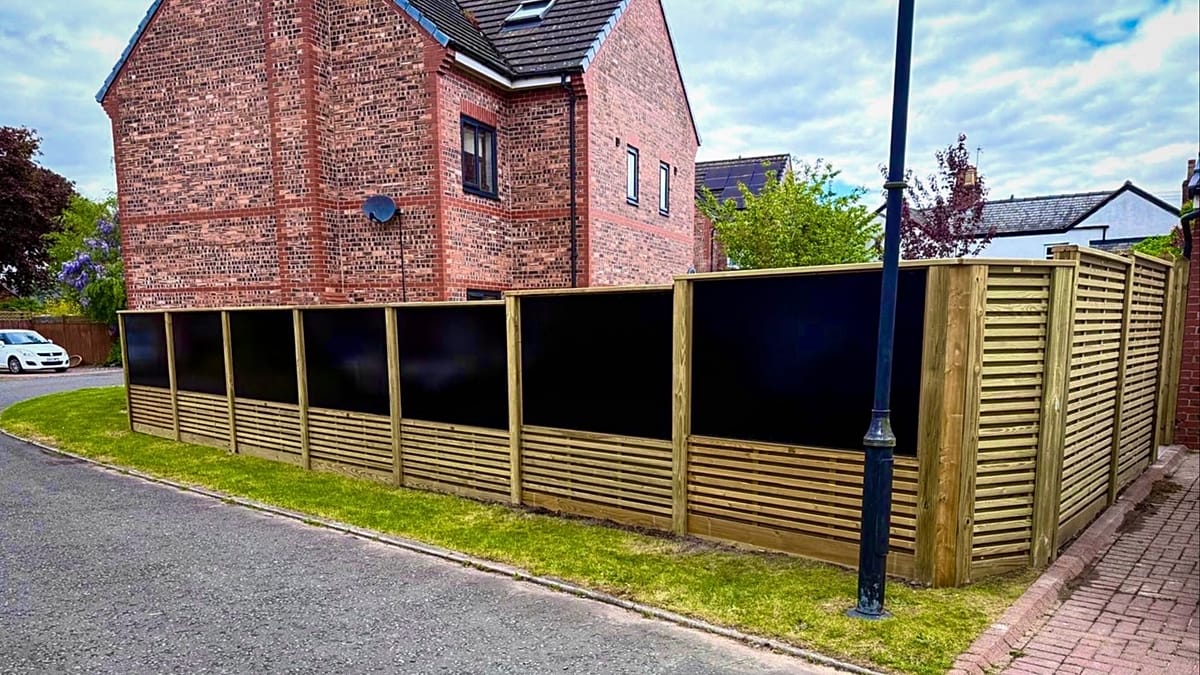
Solar fences are gaining ground in Europe, as households continue to invest in renewables amid the war on Iran.
Why it matters: Low module prices have made vertical PV a viable business line, allowing you to bypass roof constraints and scaffolding costs entirely.
When we were drinking beers at Intersolar back in 2021, if I told you we’d be mounting Tier 1 bifacial modules as privacy screens for suburban gardens, you’d have told me to go home. Yet here we are. With Chinese module prices cratering to €0.11-€0.13 per watt-peak in Rotterdam warehouses, the solar panel has officially transitioned from a high-tech asset to a commodity building material cheaper than premium timber or composite fencing.
The Death of the 'Efficiency at All Costs' Era
For years, the industry was obsessed with south-facing 35-degree tilts to squeeze every kilowatt-hour out of a €400 panel. That era is dead. When the module is essentially free, the yield-per-panel doesn't matter; the yield-per-euro of total project cost does. Vertical PV (VPV) in a garden fence configuration might lose 20-30% in annual yield compared to a perfect roof mount, but it solves the two biggest headaches for German and Dutch installers: scaffolding costs and roof integrity risks.
The Engineering Reality Check
Don't be fooled into thinking this is a DIY hobbyist's game. If you're an installer looking at this, you need to be thinking about Eurocode 1 (EN 1991-1-4) wind loads. A solar fence is a giant sail. We aren't just electricians anymore; we're structural engineers. I’ve seen 'innovative' fence projects in northern Germany buckle because the installer used standard aluminum racking instead of reinforced steel posts anchored in C25/30 concrete. Companies like Next2Sun have the right idea with specialized vertical frames, but the real margin for the local pro is in the balance of system (BOS) and the labor of the foundation, not the silicon.
This isn't a niche trend; it's a rational response to a broken supply chain that has overproduced modules. If you aren't offering a 'Solar Fence' upsell to your C&I or residential clients who have hit their roof capacity, you're leaving the easiest money of 2024 on the table.