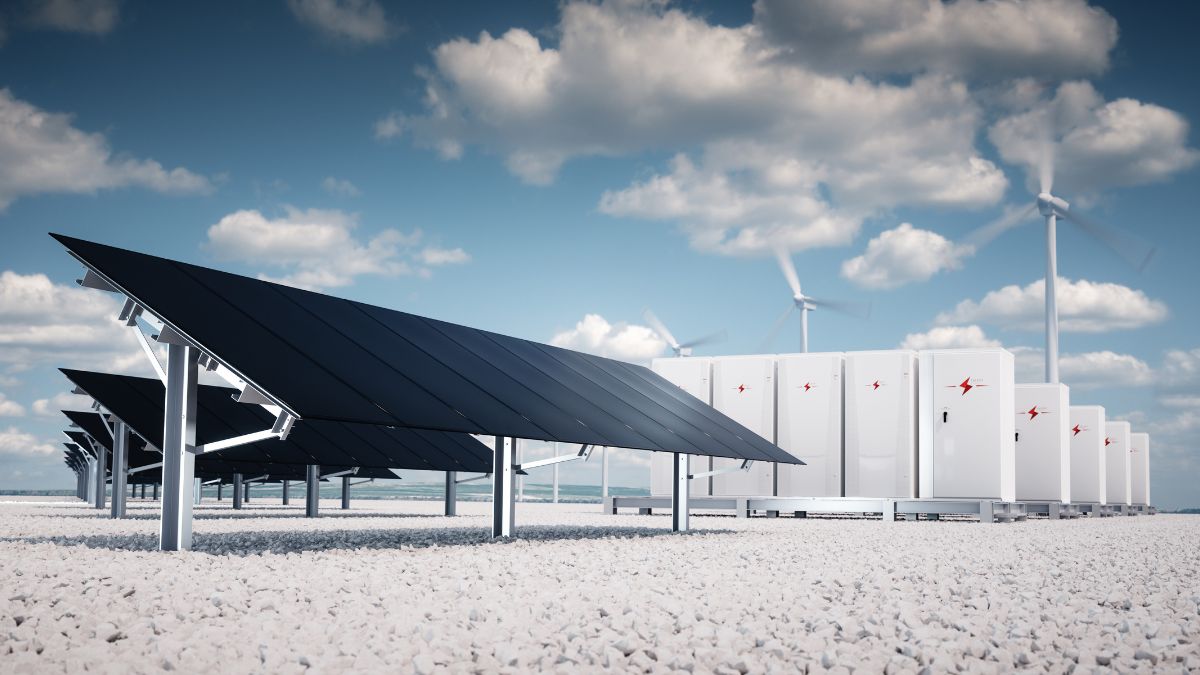
rPlus Energies has launched the Green River Energy Center in Emery County, Utah, featuring 400 MW of solar and battery storage capacity.
Why it matters: Stop pitching solar plants and start pitching dispatchable power; the 4-hour duration is no longer a luxury, it’s the price of entry for utility-scale survival.
If you’re still designing utility-scale PV plants in Europe based on simple P90 yields and a prayer for high spot prices, this Utah project is your wake-up call. We’re looking at a 1,600 MWh BESS paired with 400 MW of solar. That is a clean 4-hour duration, a ratio that is rapidly becoming the gold standard for projects that actually want to survive the 'cannibalization' effect we’re currently seeing in markets like Spain and California.
The Death of the 'Solar-Only' Asset
In the EU, we’ve spent years treating storage as an optional 'add-on' to make a project look green or to shave a bit of peak. Those days are over. In the Spanish market (OMIE), we’ve already seen prices hit €0/MWh or go negative during solar peaks. A 400 MW solar plant without significant duration storage is now a liability, not an asset. The Green River project proves that the smart money is moving toward dispatchable power plants, not just generation sites. If your pipeline doesn't include a 4-hour LFP (Lithium Iron Phosphate) strategy, you're building a stranded asset.
The 4-Hour Benchmark
Why 4 hours? Because that is the magic number to bridge the gap between the solar peak and the evening ramp. In Germany or Italy, where capacity markets are tightening, being able to guarantee 4 hours of discharge at nameplate capacity changes your ROI from 'marginal' to 'bankable.' We’ve seen this pattern before with the early adopters in the UK; those who built 1-hour systems are already being forced to augment their sites to stay competitive in frequency response and arbitrage markets.
Don't wait for a subsidy. The math in Utah works because they've realized that 1,600 MWh of storage isn't a cost—it's the only way to protect the value of the 400 MW of solar panels you just bolted to the ground.