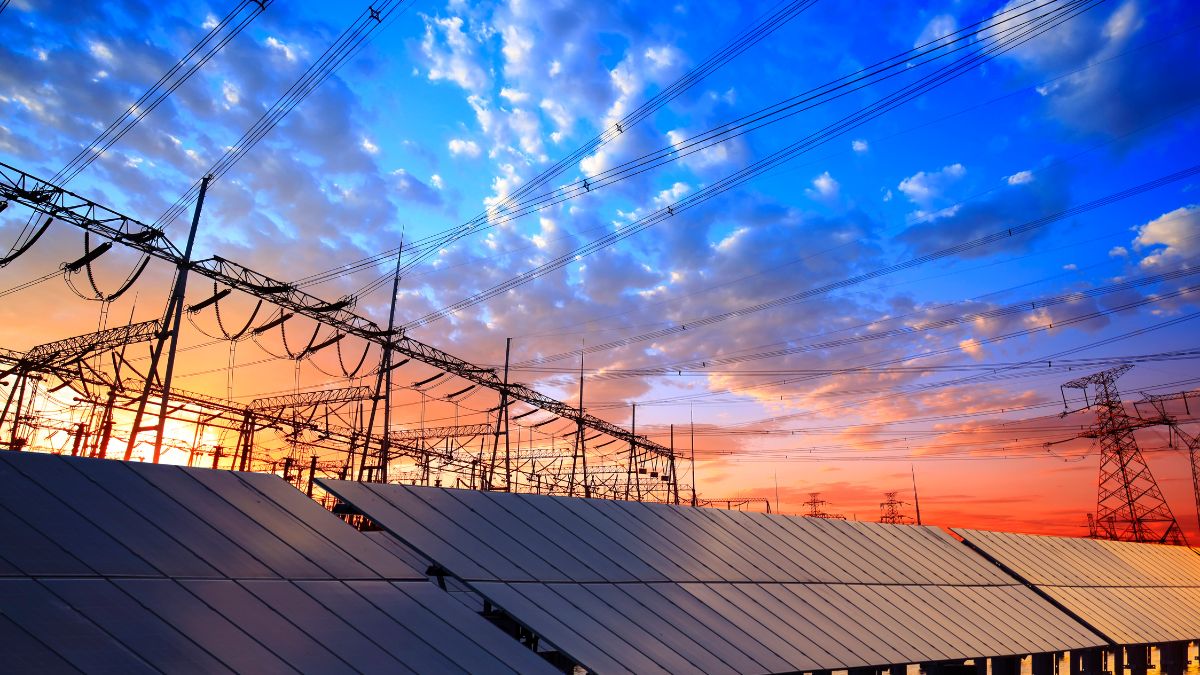
NHPC Limited has invited online bids for a 400 kV transmission line project in Uttar Pradesh, facilitating power evacuation from a 1,200 MW solar park.
Why it matters: Grid connection is the new scarcity; if you aren't factoring massive infrastructure lead times into your C&I or utility bids, your project is already dead.
While a 400 kV line in Uttar Pradesh might feel worlds away from a rooftop in Bavaria or a utility site in Murcia, the math behind this NHPC bid should make every European developer pause. We are looking at a ₹259.22 crore (approx. €28.5 million) investment to unlock 1.2 GW of solar capacity. That breaks down to roughly €23,750 per MW for high-voltage evacuation infrastructure. Try getting that figure past a regulator in the Netherlands or Germany today.
The Efficiency of the 'Solar Park' Model
What India gets right—and what the EU’s fragmented grid policy often gets wrong—is the centralized "evacuation" strategy. By bidding out the transmission as a single, massive project for the Jalaun Solar Park, NHPC avoids the piecemeal, every-developer-for-themselves chaos we see in Spain. In the Spanish market, Red Eléctrica is drowning in nudos de transición justa (just transition nodes) because the infrastructure doesn't precede the panels. In India, the infrastructure is the prerequisite for the park's viability.
The Reality Check for EU Installers
We've seen this pattern before: developers ignore the transmission reality until the PPA is signed and the modules are on the water, only to find the local grid operator (TSO) has a three-year backlog for a simple transformer upgrade. If you are operating in markets like Poland or the TenneT zones in Germany, your project is no longer a solar project—it is a grid project that happens to have solar attached. NHPC’s move proves that utility-scale success in the 2020s is 10% PV technology and 90% infrastructure logistics.