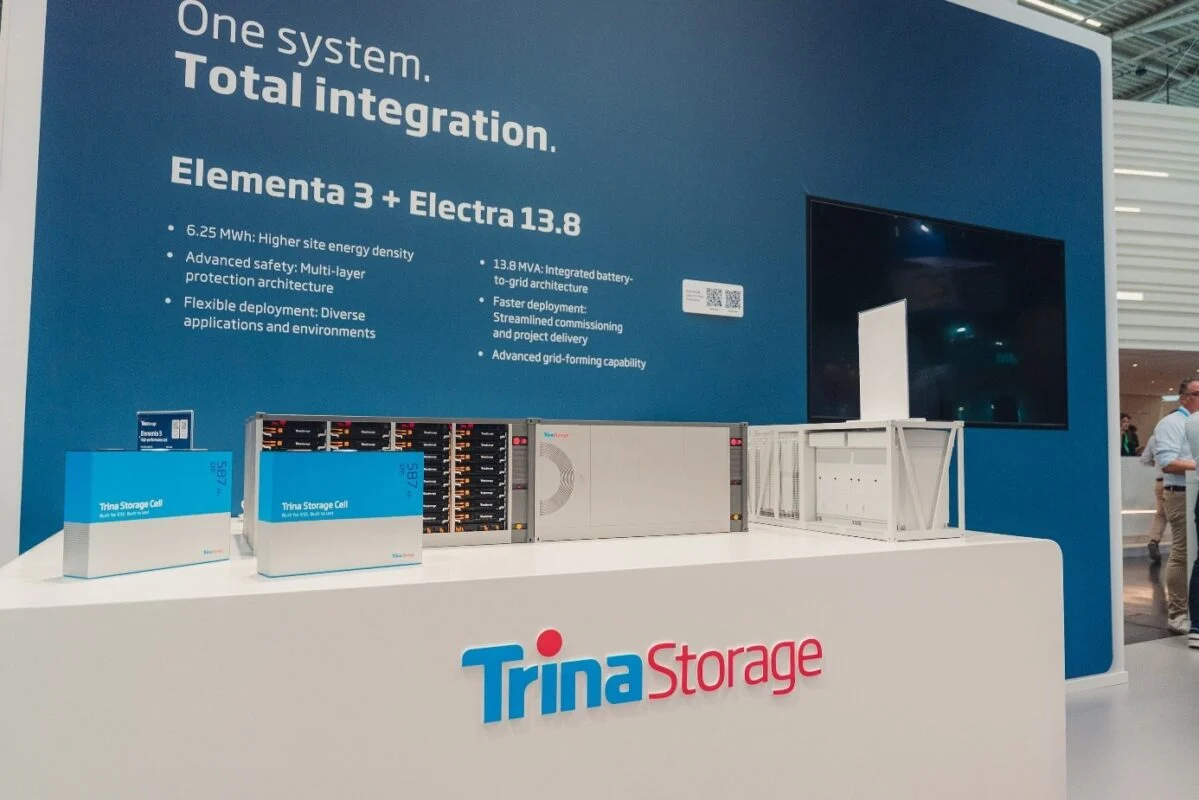
With ees Europe taking place in Munich, Germany, this week alongside Intersolar Europe and Smarter E, Energy-Storage.news takes a look at some expo highlights.
Why it matters: Grid-forming tech is shifting from a 'nice-to-have' to a mandatory grid-code requirement for every C&I project over 500kW.
The VDE-AR-N 4110 Reality Check
Walking the halls at ees Europe, the pivot toward grid-forming Power Conversion Systems (PCS) isn't just a tech flex; it’s a survival strategy. For developers in Germany or Benelux, 'grid-following' is becoming a liability. As PV penetration hits critical mass, network operators are tightening the screws. If your project isn't offering synthetic inertia or black-start capability, you're looking at higher curtailment risks. Companies like Sungrow and SMA are shouting about this because they know the mid-market is about to get squeezed by grid stability requirements that were previously reserved for utility-scale giants.
DC-Coupling: The Efficiency Trap?
We’re seeing a massive push for DC-coupled architectures in the C&I space. The pitch is simple: less conversion loss. But for the installer on the ground, the reality is complex integration. While a 5% efficiency boost looks great on a spreadsheet, the O&M nightmare of proprietary DC-bus communications can kill your margins. Unless you’re sticking to a single-vendor ecosystem—think Huawei’s full-stack approach—mixing and matching DC components is a recipe for a support line that never stops ringing. My advice? Only spec DC-coupling if you have a direct line to the manufacturer's Tier 3 engineering team.
The Data Center Gold Rush
Data centers are the new 'High-End C&I.' They have the deepest pockets but the least patience. A 10MW BESS for a Tier 3 data center in Frankfurt requires 99.999% reliability. If you’re still pitching standard lithium-ion without advanced thermal management or liquid cooling, you’re bringing a knife to a gunfight. The shift toward specialized fire suppression and long-duration energy storage (LDES) at ees shows where the high-margin work is moving. If you aren't upskilling your team on liquid-cooled rack maintenance today, you’re forfeiting the most lucrative segment of the 2026-2030 market.