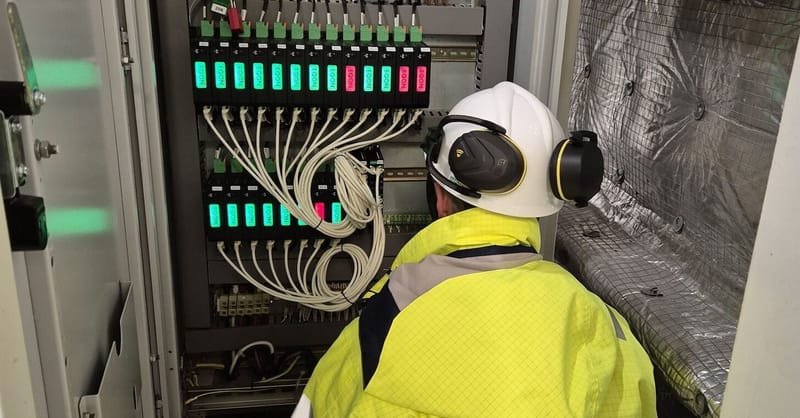
Service vessels and drilling rigs used the cables to prevent equipment from freezing, but they always ran on full blast, even when it wasn’t necessary to…
Why it matters: Your C&I clients are wasting more power on 'dumb' gutter heating than your winter PV yield produces—solve that, and you're an essential partner, not just a contractor.
We spend our professional lives chasing 1% efficiency gains in inverter topology, yet we routinely ignore the "dumb" resistive loads that eat our clients' winter yields for breakfast. In Northern and Central Europe, commercial rooftops and parking ramps are lined with hundreds of meters of heat trace cables. Most are managed by crude thermostats that trigger at 3°C, running at 100% capacity regardless of whether there's actually moisture to freeze.
The Arithmetic of Inefficiency
A standard self-regulating cable pulls roughly 20W to 40W per meter. For a typical 50,000 sqm warehouse in Poland or Germany, you might have 500 meters of gutter and pipe heating. That is a 10kW to 20kW constant draw. In the dead of January, when a 200kWp PV system is lucky to scrape together 15kWh of daily production, that "dumb" heating system is burning through 300kWh+ per day. You aren't selling energy independence; you're just subsidizing a toaster on the roof.
Vayer’s $6M raise (the startup founded by Mikal Løvik) is a signal that the "low-hanging fruit" of the energy transition is shifting from generation to intelligent load management. For installers, this is a massive, untapped upsell. Stop just bolting on modules and start auditing parasitic loads. If you can integrate smart cable control—using actual humidity and weather forecast data—into a building’s EMS or a Victron/SMA ecosystem, you move from being a commodity panel-slapper to a high-value asset manager.