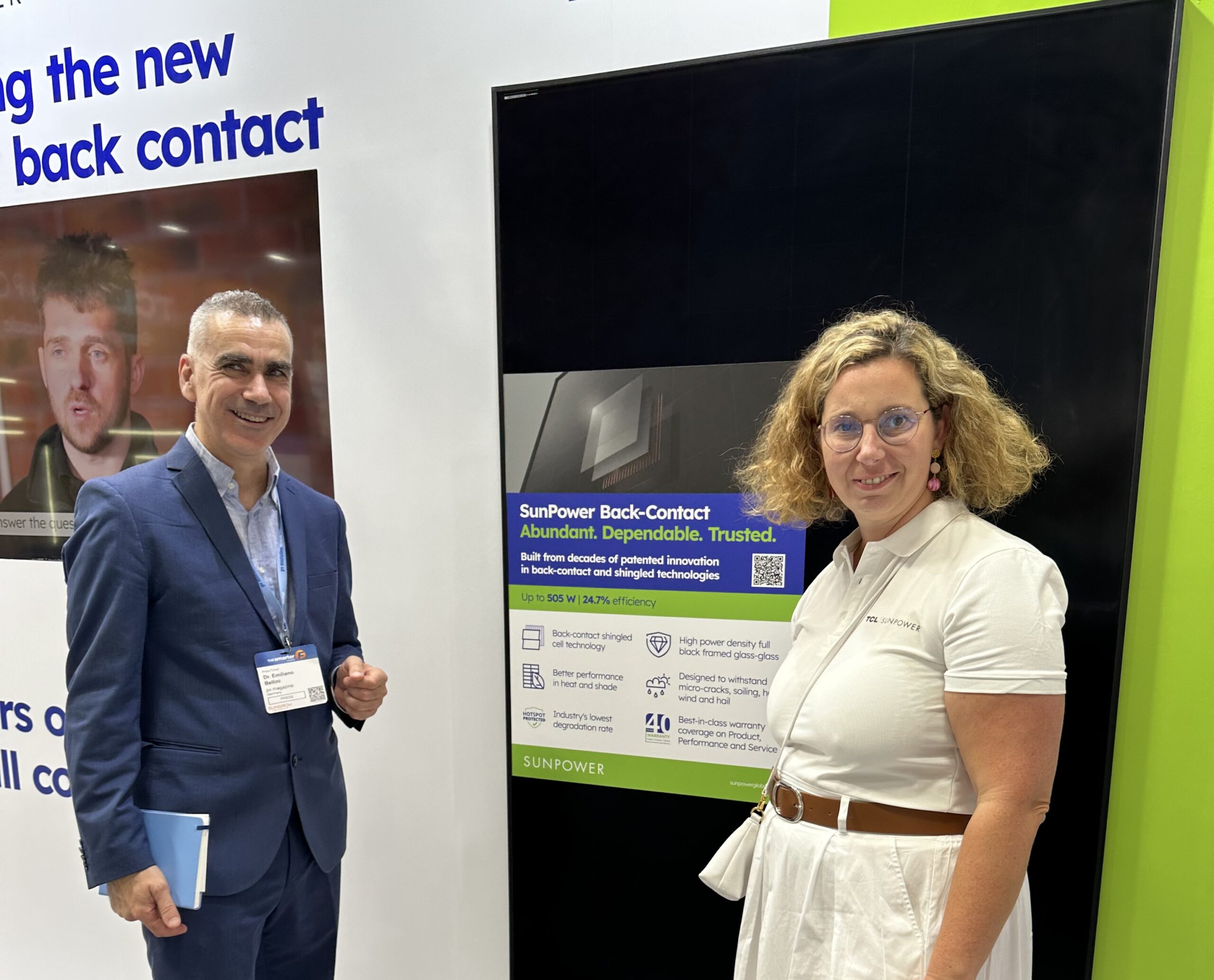
El módulo, con un rendimiento del 24-7 %, utiliza un diseño simplificado de 54 medias celdas dispuestas en forma de teja con contactos traseros y conexiones eléctricas completas en la parte posterior, lo que, según la empresa, mejora el rendimiento, la fiabilidad y la resistencia mecánica.
Why it matters: If you're still pitching 420W modules, you're about to lose your high-end residential leads to competitors offering 500W+ in the same roof footprint.
The residential solar market in Europe just hit a psychological and technical breaking point. For years, 400W to 420W was the comfort zone for residential installers in markets like Germany and the Netherlands. TCL SunPower crashing through the 500W barrier with a 54-cell format isn't just an incremental update; it’s a direct assault on the relevance of standard N-type TOPCon modules.
The Efficiency Arms Race Is Real
At 24.7% efficiency, we are knocking on the door of the theoretical limit for single-junction silicon. By combining IBC (Interdigitated Back Contact) technology with a shingled cell layout, TCL is solving the two biggest headaches for roofers: micro-cracks and aesthetic complaints. Shingled cells handle thermal expansion better than traditional ribbon-connected cells, and the absence of busbars on the front means no more 'grid-line' eyesores for high-end homeowners.
Margin Analysis for the Sharp Installer
The bottom line: If you are still pitching 21% efficiency PERC or entry-level TOPCon to a premium residential client, you are leaving yourself wide open to being underbid by a competitor offering 20% more power in the same footprint. We’ve seen this pattern before with the shift from poly to mono—those who move late get stuck with unmovable inventory.