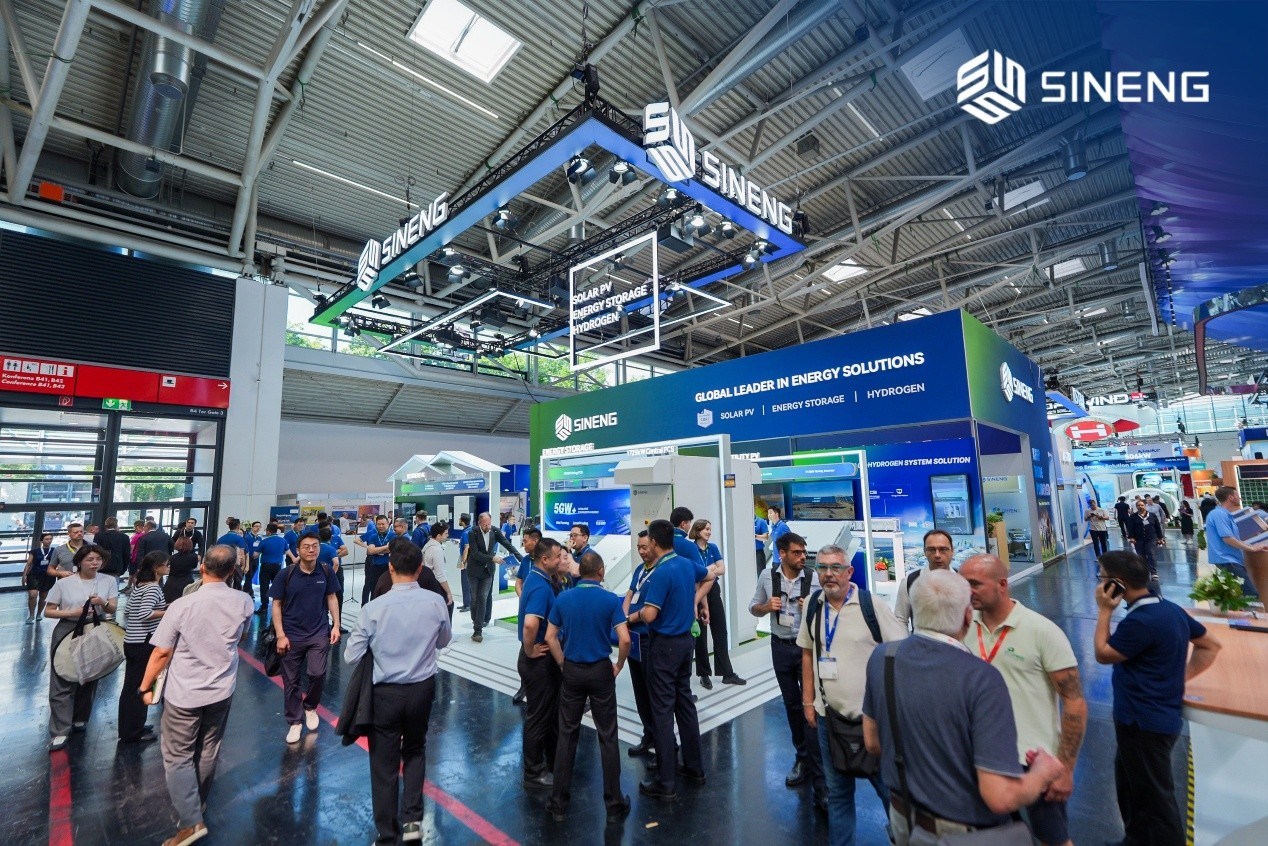
Sineng Electric showcased innovative energy solutions at Intersolar Europe 2026, emphasising their advanced grid-forming technology and AI capabilities for solar PV, energy storage, and hydrogen production.
Why it matters: If your utility-scale bid doesn't include grid-forming capabilities in 2026, you're not just losing the tender; you're building an obsolete asset.
If you walked the halls of Messe München this year, you saw it everywhere: "Grid-forming" is the new "Tier 1." For years, Sineng was often viewed as the value play—the brand you’d pivot to when the CAPEX on a 100MW site in Spain was looking too tight for SMA or Sungrow. But this Intersolar display signals a definitive pivot from budget-friendly hardware to high-spec grid stabilizers. This isn't just marketing fluff; it's a survival tactic for the 2026 landscape.
The Ancillary Services Gold Rush
In 2026, the European market has zero patience for "grid-following" inverters. With renewable penetration levels hitting the ceiling in markets like the Netherlands and parts of Germany, the money isn't in the electrons anymore—it's in the stability. Sineng's push into grid-forming tech and AI-managed BESS is a direct response to ENTSO-E’s stricter requirements for synthetic inertia. If your inverter can’t keep the grid alive during a frequency dip, your project isn't getting a grid connection, period. We are seeing tenders in the UK and Ireland where grid-forming capability is worth a 15% premium on the PPA price.
Hydrogen: The Developer's Mirage?
While Sineng is shouting about hydrogen production, most installers should treat it with a healthy dose of skepticism. Unless you're developing 500MW+ projects next to a heavy industrial cluster in the Ruhr region or a port in Rotterdam, hydrogen-ready inverters are a "nice-to-have" that adds complexity you don't need yet. The real story is the AI-integrated O&M. We’ve all seen the nightmare of 15% downtime on older string inverters because the monitoring software couldn't tell a blown fuse from a cloud. If Sineng’s new AI stack actually delivers predictive failure analysis—instead of just pretty graphs—that’s where the margin is recovered.
The gap between "value" brands and "premium" European ones has effectively closed on a technical level. Your decision-making now has to shift from "Will it work?" to "How much will the frequency response revenue be?"