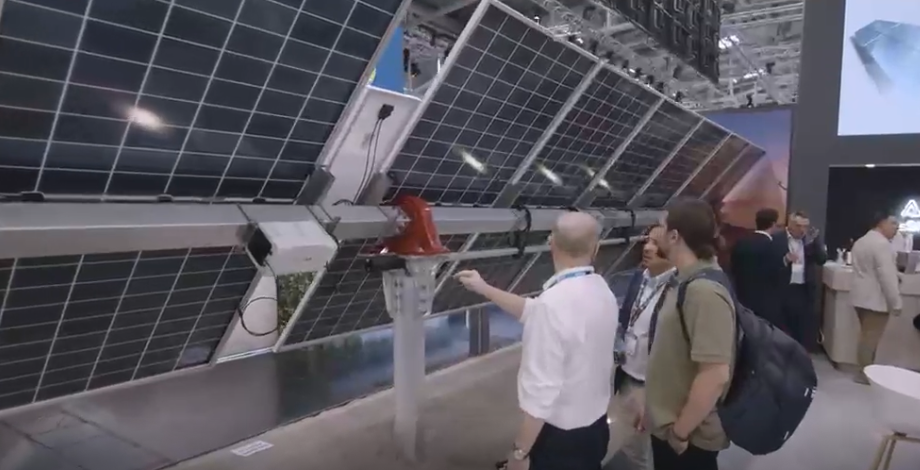
Este tracker está orientado especialmente a grandes emplazamientos con amplia disponibilidad de terreno, como instalaciones situadas en zonas desérticas o superficies abiertas donde resulta posible maximizar la continuidad de las filas.
Why it matters: Axial’s move toward 160m rows forces a choice: lower upfront hardware costs versus significantly higher risk in terrain adaptability and long-term O&M exposure.
Axial is playing a high-stakes game of chicken with physics. By stretching a single-row tracker to 160 meters, they are chasing the holy grail of utility-scale development: minimizing the 'parts count' per megawatt. Fewer motors, fewer communication controllers, and less wiring sounds like a dream for a procurement officer’s spreadsheet, but for the EPCs in the trenches of southern Spain or Greece, it brings a distinct set of headaches.
The CAPEX vs. Topography Trap
In the desert environments Axial mentions, flat land is a given. But in Europe? Try finding 160 meters of perfectly contiguous, flat terrain in Extremadura or Puglia without massive civil works. The moment you have to start grading soil or dealing with 3% slopes, the rigid length of the Titan becomes a liability rather than an asset. If your terrain isn't perfect, the cost savings on motors will be instantly incinerated by your earth-moving budget.
The O&M Gamble
We’ve seen this pattern before with the industry's move toward 2P (two-in-portrait) configurations. When you consolidate more modules onto a single drive system, your single point of failure risk skyrockets. If a motor fails on a standard 80-90 meter row, it’s a nuisance. If a motor fails on a 160-meter Titan row, you’ve just lost roughly 100kW of production until a technician can get on-site. In an era where PPA margins are razor-thin, that kind of downtime is a localized disaster.
Ultimately, the Titan isn't a tool for the average developer. It’s a specialized weapon for flat-land mega-projects where the primary goal is a sub-€20/MWh LCOE. If you’re building on anything that looks like a hill, stick to shorter, more modular rows.