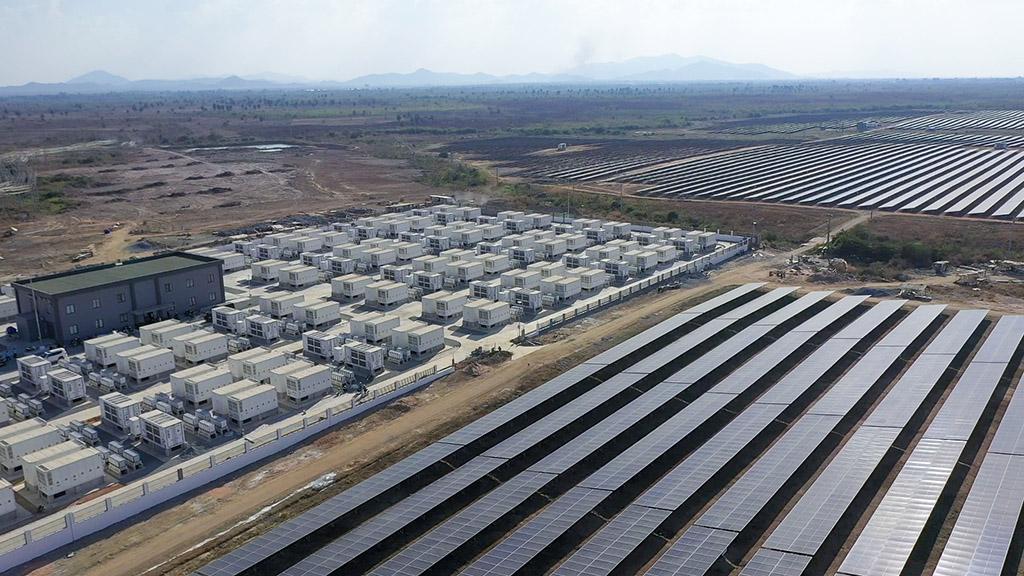
ADB has approved a Royal Government of Cambodia application for financial support for a 250MW/500MWh battery storage project.
Why it matters: Grid-forming batteries are moving from niche pilots to bankable utility-scale assets; ignore this tech shift and your BESS project will be obsolete before it's commissioned.
While European TSOs are still stuck in the white-paper phase of defining 'virtual synchronous machines,' Cambodia is just going out and building one. This 500MWh project isn't your standard peak-shaving play; it’s a massive deployment of grid-forming (GFM) technology. For the project developers in the audience, this is the signal you’ve been waiting for: grid-following inverters are yesterday’s news, and GFM is the new baseline for bankability.
Solving the Inertia Gap
In markets like Germany or Spain, where solar penetration is hitting the ceiling, we’re seeing a growing panic over lost inertia as coal and gas plants wind down. The traditional BESS setup—grid-following—is a passenger; it needs a stable voltage and frequency signal to function. GFM batteries, like those utilizing SMA’s Grid-Forming solutions or Tesla’s Megapack, act like the driver. They create the signal, providing the synthetic inertia needed to keep a grid from collapsing during a fault.
The fact that the Asian Development Bank (ADB) is backing this indicates that the 'risk premium' on GFM tech is evaporating. If you are developing utility-scale solar in a region with a weak grid (looking at you, Greece and Eastern Europe), you should be spec-ing GFM capabilities today. Why? Because as ENTSO-E moves toward stricter grid code requirements, your 'dumb' battery will become a stranded asset, while GFM-capable plants will command a premium in the ancillary services market.
Don't wait for your local DSO to demand it. Start pitching GFM as a solution to grid congestion now. If you can prove your BESS stabilizes the local 20kV or 110kV line rather than just adding to the headache, you’ve just found your fast-track to a grid connection permit.