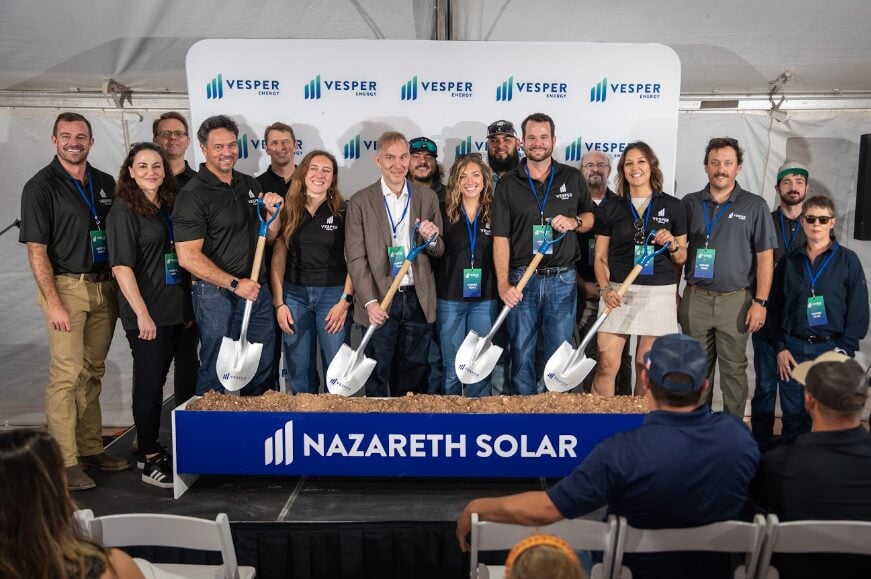
US developers Vesper Energy, rPlus Energies and Matrix Renewables have announced a number of project advancements in the US this week.
Why it matters: Capital is fleeing the EU for the US IRA subsidies; if your project pipeline relies on international private equity, start looking for local backers now.
When you see Matrix Renewables—a platform backed by the global powerhouse TPG Rise Fund—doubling down on the US, you shouldn't just shrug it off as 'overseas news.' Matrix has a massive footprint in Spain and Italy. Their pivot toward the US market is a loud signal that the Inflation Reduction Act (IRA) is successfully vacuuming up the dry powder that used to fund European utility-scale pipelines.
The ROI Gravity Well
Let’s talk numbers. Between the 45X production tax credits and the domestic content bonuses, a project in the US Midwest can often pencil out to a 15-20% higher IRR than a similar-sized development in Puglia or Extremadura. For a developer like Matrix, capital is agnostic. If the EU’s Net-Zero Industry Act continues to offer more red tape than revenue certainty, expect these 'global' players to leave their European portfolios on autopilot while they chase the US gold rush.
The Supply Chain Squeeze
There is a direct correlation between these US announcements and the price you pay for modules in Rotterdam. Large-scale developers like Vesper Energy aren't buying from your local wholesaler; they are signing multi-gigawatt master supply agreements directly with Tier-1 manufacturers. Every 400MW project that 'advances' in the US is a massive block of TOPCon capacity locked away, potentially tightening supply for the mid-market European installer who relies on spot-market availability.
A Lesson in Scale
While European developers are often bogged down in 24-month permitting cycles for a 20MW site, the US is moving pieces on a different board. rPlus Energies and Vesper are pushing projects that regularly exceed the 100MW mark. This scale allows for sophisticated BESS integration that makes the current European C&I storage market look like a hobby. If you aren't looking at how these firms are structuring their 4-hour battery duration deals, you're going to be blindsided when those same requirements hit the EU grid codes in three years.