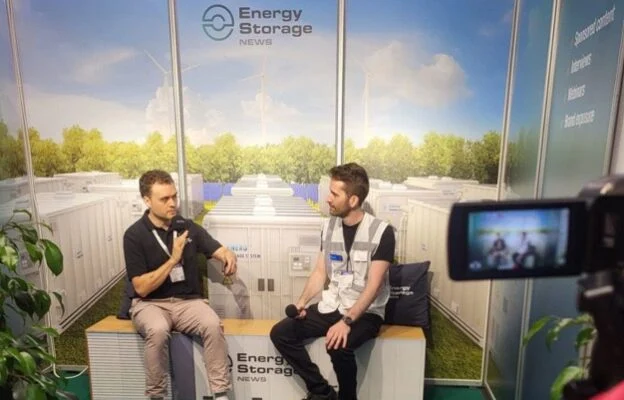
Sodium-ion BESS startup Moonwatt expects the battery chemistry to reach price cost parity with lithium iron phosphate (LFP) in the next two or three years.
Why it matters: LFP prices are dropping faster than sodium-ion can scale, meaning its real value for you lies in cold-weather performance rather than pure cost savings.
We’ve heard the 'two years away' story so often in the PV world it’s practically a recurring calendar event. While Moonwatt’s CCO is talking up sodium-ion (Na-ion) at Smarter E, he’s ignoring the elephant in the room: LFP isn’t a stationary target. It’s a falling knife. With Chinese Tier-1 LFP cell prices currently hovering around $50-$60/kWh, sodium-ion doesn't just need to be cheap; it needs to survive a margin bloodbath.
The Moving Target Problem
The logic for Na-ion is sound on paper—sodium is everywhere, and it doesn't require the ethically messy cobalt or the price-volatile lithium. But for a European installer planning a 500kWh C&I project in 2025, 'on paper' doesn't pay the bills. CATL and BYD have optimized LFP manufacturing to a degree that makes entry-level competition look like a suicide mission. For Na-ion to reach parity by 2027, it has to scale during a period where LFP overcapacity is so high that manufacturers are practically giving cells away to keep factory utilization above 60%.
The Real Hook: Temperature, Not Just Cents
If you're building BESS in the Austrian Alps or Northern Sweden, forget the price parity talk. The real win for sodium-ion isn't the invoice total; it’s the operating window. Na-ion maintains significantly better capacity retention at -20°C compared to LFP. I’ve seen LFP racks in unheated containers struggle during German winters, requiring parasitic heating loads that eat into the project's IRR. If Moonwatt or Northvolt can deliver a rack that doesn't need a heavy HVAC footprint in cold climates, that’s where you win the contract, even if the cells cost 5% more.
The Field Engineer's Reality Check
Don't redesign your 2025 pipeline for sodium. We are currently in the 'pilot and PowerPoint' phase. Until we see a standardized 20-foot containerized solution with integrated BMS that doesn't require a bespoke integration for every SMA or Sungrow inverter on the market, Na-ion remains a niche play for high-spec industrial tenders. Stick with the LFP price crash for now, but keep an eye on the discharge curves—sodium's safety profile and cold-weather performance are the metrics that will actually disrupt the market, not just a marginal drop in raw material costs.