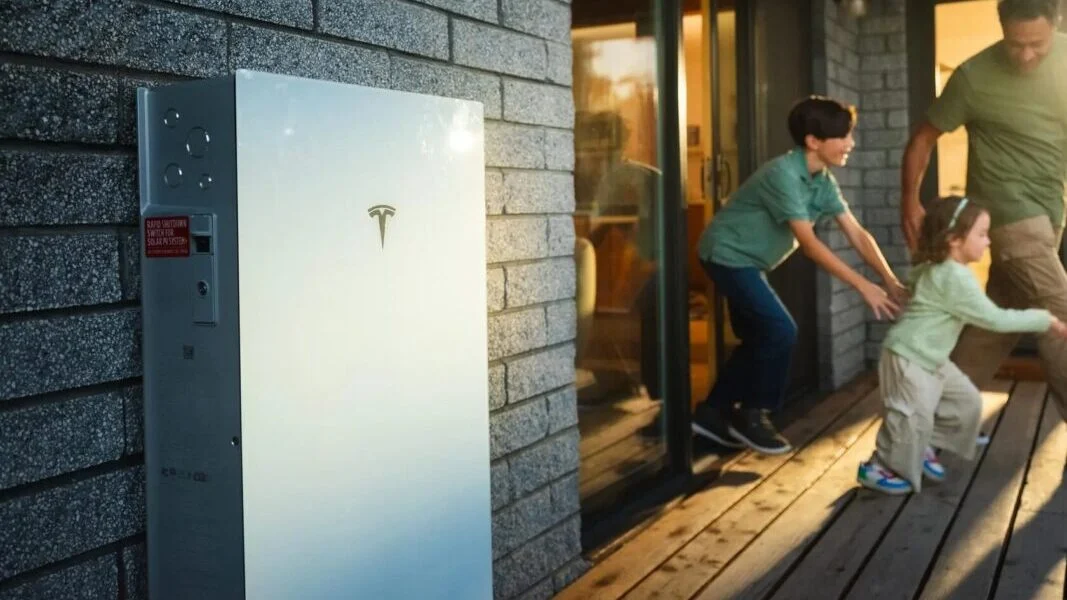
US residential solar and energy storage installer Sunrun, energy management platform Renew Home, and Tesla have announced an agreement to deliver more than 16GW of flexible energy capacity to US hyperscalers and utilities.
Why it matters: The era of 'set and forget' solar is over; your future revenue depends on aggregating your customers' batteries into the wholesale market.
While European installers are still busy fighting over shrinking residential margins and the death of net metering in markets like the Netherlands, the American giants just showed us the endgame. A 16GW Virtual Power Plant (VPP) isn't just a pilot project; it’s a utility-scale power station built from distributed residential hardware. For context, 16GW is roughly the entire peak demand of Belgium, sourced entirely from home batteries and smart thermostats.
The 'Hyperscaler' Pivot
The real signal here isn't the technology—we’ve had VPPs for years—it’s the customer. By targeting 'hyperscalers' (read: Amazon, Google, and Microsoft), Tesla and Sunrun are solving the AI industry’s biggest headache: 24/7 carbon-free energy. In the EU, we are seeing the same pressure. Data centers in Frankfurt, Dublin, and Amsterdam are desperate for local flexibility to bypass grid congestion. If you are a developer in the DACH region, you shouldn't just be selling a 10kWh battery to a homeowner; you should be looking at how that 10kWh helps a local industrial park avoid €150/kW peak shaving charges.
The Margin Shift
We’ve seen this pattern before. Hardware becomes a commodity. The real money migrates to the orchestration layer. In Germany, the Flexibilitätsstärkungsgesetz (Flexibility Strength Law) is laying the groundwork for exactly this. If you’re an installer in Europe, your future isn't in the 8% margin on a PV module. It's in the recurring revenue from grid services. Sunrun and Tesla are essentially becoming a decentralized utility that doesn't own a single power line. They are leveraging the customer's CAPEX to sell high-value dispatchable power to PJM (the US equivalent of our TSOs like Amprion or TenneT).
The bottom line: If your business model still relies on 'saving the planet' or 'independence from the grid,' you're selling a 2015 product. The 2025 product is 'Grid Interactivity.' Start looking at aggregators like Next Kraftwerke or Sonnen now, because the 16GW VPP model is coming for the European market next.