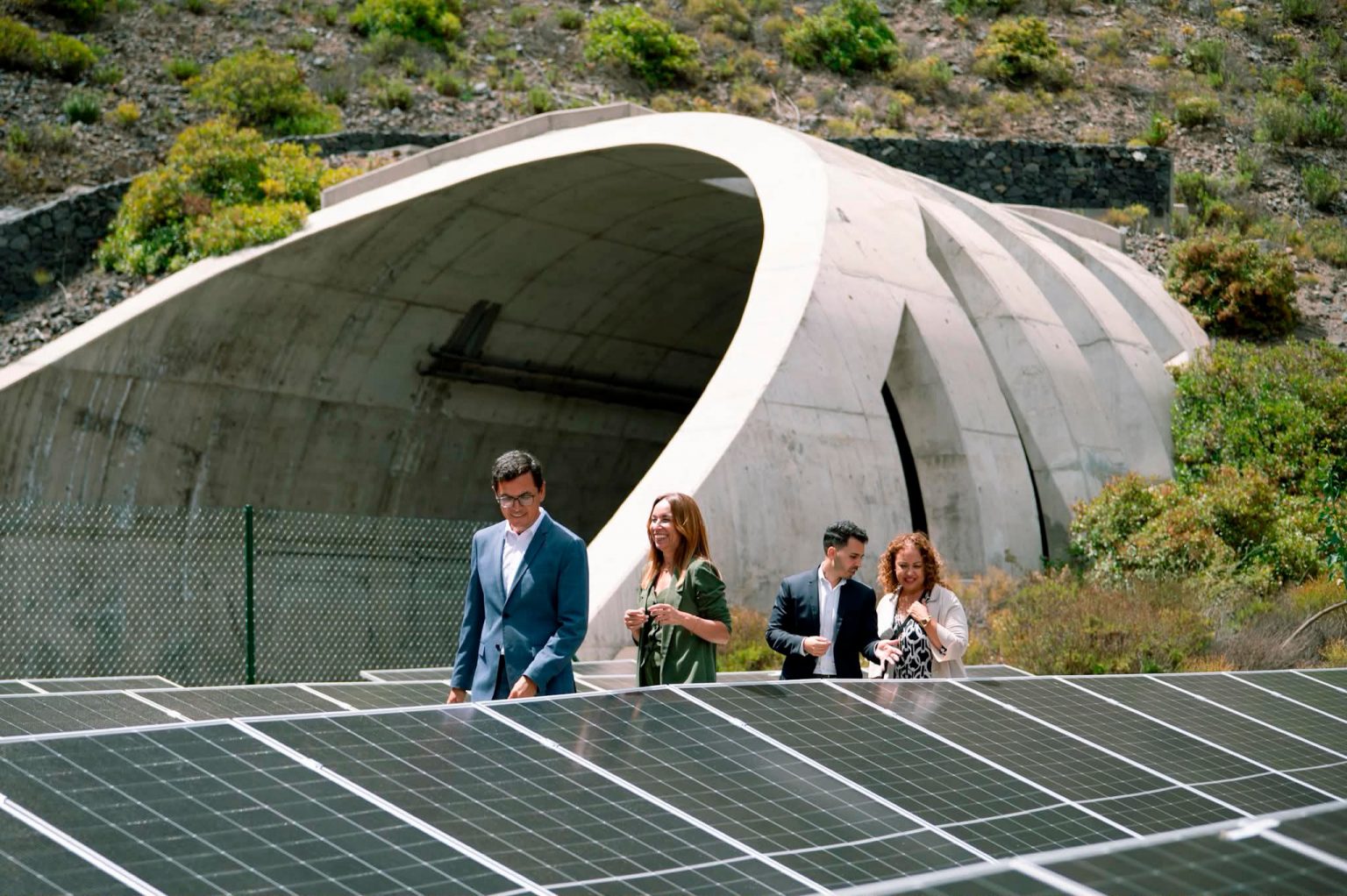
La actuación, con una inversión de 274.094 euros, ha sido ejecutada por Tragsa, y consiste en una planta que incorpora 306 módulos fotovoltaicos bifaciales de 620 Wp, distribuidos entre las dos bocas del túnel.
Why it matters: Infrastructure PV offers nearly double the per-watt margin of residential solar if you can handle the specialized safety and engineering requirements.
Let’s talk about the price tag: €274,094 for a 190 kWp system. At €1.44 per watt, any residential or standard C&I installer would think they’ve struck gold. In a world where utility-scale is scraping sub-€0.60/W and rooftop is fighting to stay above €1.00, this project in the Canary Islands reveals where the real margins are hiding: specialized public infrastructure.
The Infrastructure Arbitrage
Tunnels are energy vampires. They require 24/7 lighting and high-powered ventilation systems. Unlike a typical factory that might shut down on weekends, a tunnel’s load profile is incredibly consistent. By installing 306 bifacial 620 Wp modules directly at the source of consumption, the Canary Islands government isn't just 'going green'—they are hedging against the massive costs of diesel-heavy island power generation.
If you are an EPC tired of the race to the bottom in residential solar, this is your signal. Stop bidding on the 50kW warehouse roof where the owner is haggling over every cent. Start looking at transport departments. These projects require specialized certifications and engineering chops, but as the El Bicho project shows, the budget is there for those who can navigate the complexity. In the Canary Islands, where the LCOE of PV is now drastically lower than the cost of grid power, these projects are the ultimate ROI play for the public sector.