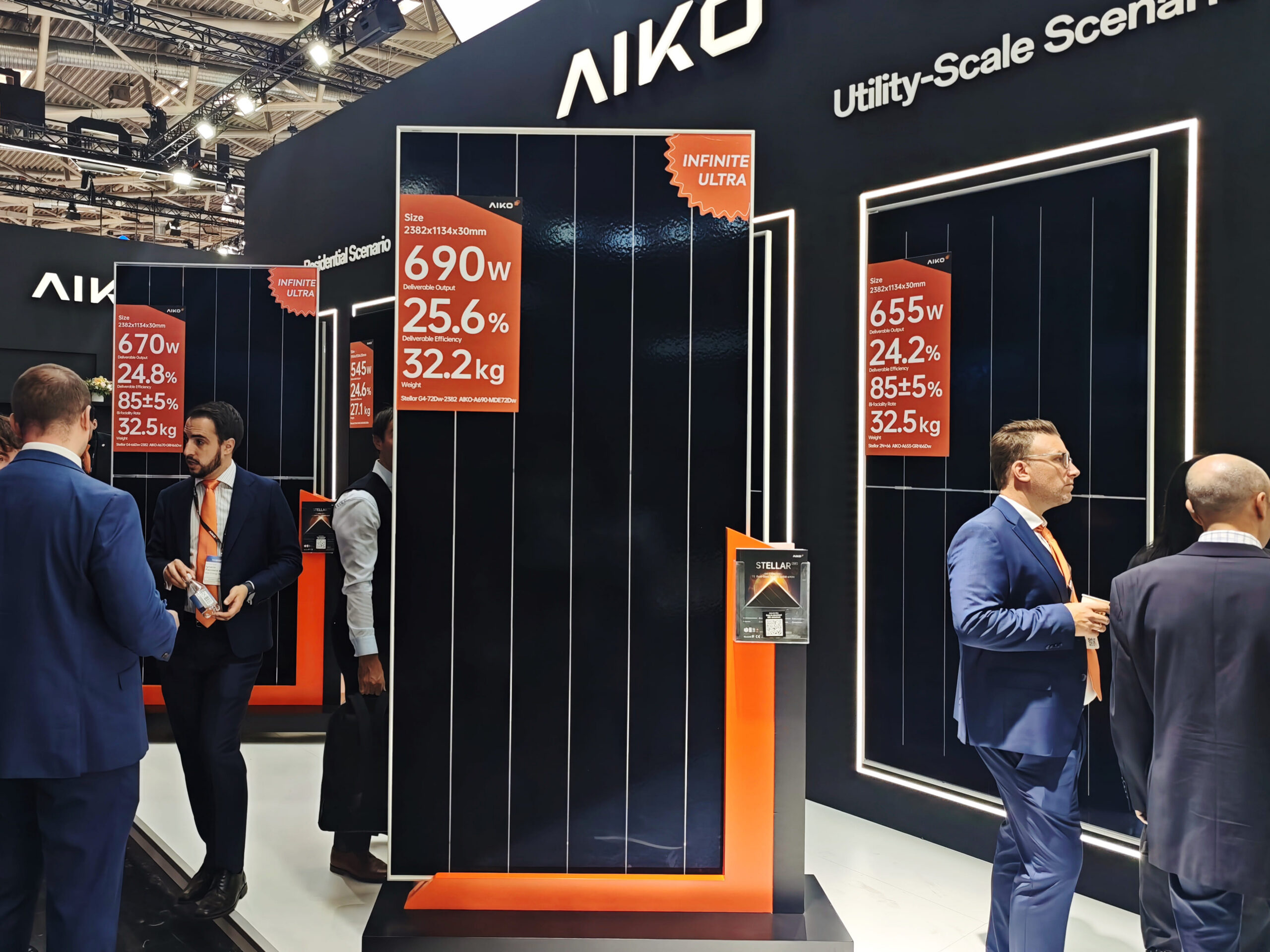
Durante el evento, la compañía también presentó la nueva Serie Z, un módulo ABC resistente al fuego destinado al mercado residencial. Este producto incorpora un material de barrera térmica ignífugo y un sistema de protección que combina control de temperatura, prevención de fallos por arco y materiales de encapsulado con alta retardancia a la llama.
Why it matters: If you’re selling to high-end residential clients in fire-sensitive EU regions, Aiko’s fire-resistant 'Z-Series' is a more powerful sales tool than the record-breaking efficiency numbers.
Aiko is currently the technical darling of the PV world, and hitting 25.6% efficiency with their ABC (All Back Contact) technology isn't just a PR stunt—it's a direct shot across the bow of LONGi’s HPBC and Maxeon’s IBC. While the 690W headline gets the clicks, the savvy European installer needs to look closer at the "Serie Z." In markets like the Netherlands, Germany, or Italy—where insurance premiums and building codes are tightening around fire safety—Aiko is betting that "safe" sells better than "efficient."
The Practical Margin Play
We’ve seen this pattern before: a manufacturer pushes the N-type envelope so far that the price-per-watt delta becomes impossible to justify for a standard 10kWp residential install. However, Aiko is playing a different game here. By integrating arc-fault prevention and thermal barriers directly into the module, they are attacking the soft costs of a project. If you can pitch a module that lowers home insurance risk or simplifies compliance with local fire regulations, you aren't just selling PV; you're selling a de-risked asset.
Ultimately, Aiko is trying to escape the "commodity trap." By bundling fire safety with record-breaking efficiency, they are forcing TOPCon players into a race to the bottom while they attempt to carve out a high-margin premium tier. If you’re in the C&I space, that 690W module on a ballast system is a labor-cost dream—fewer rails, fewer clamps, and faster commissioning.