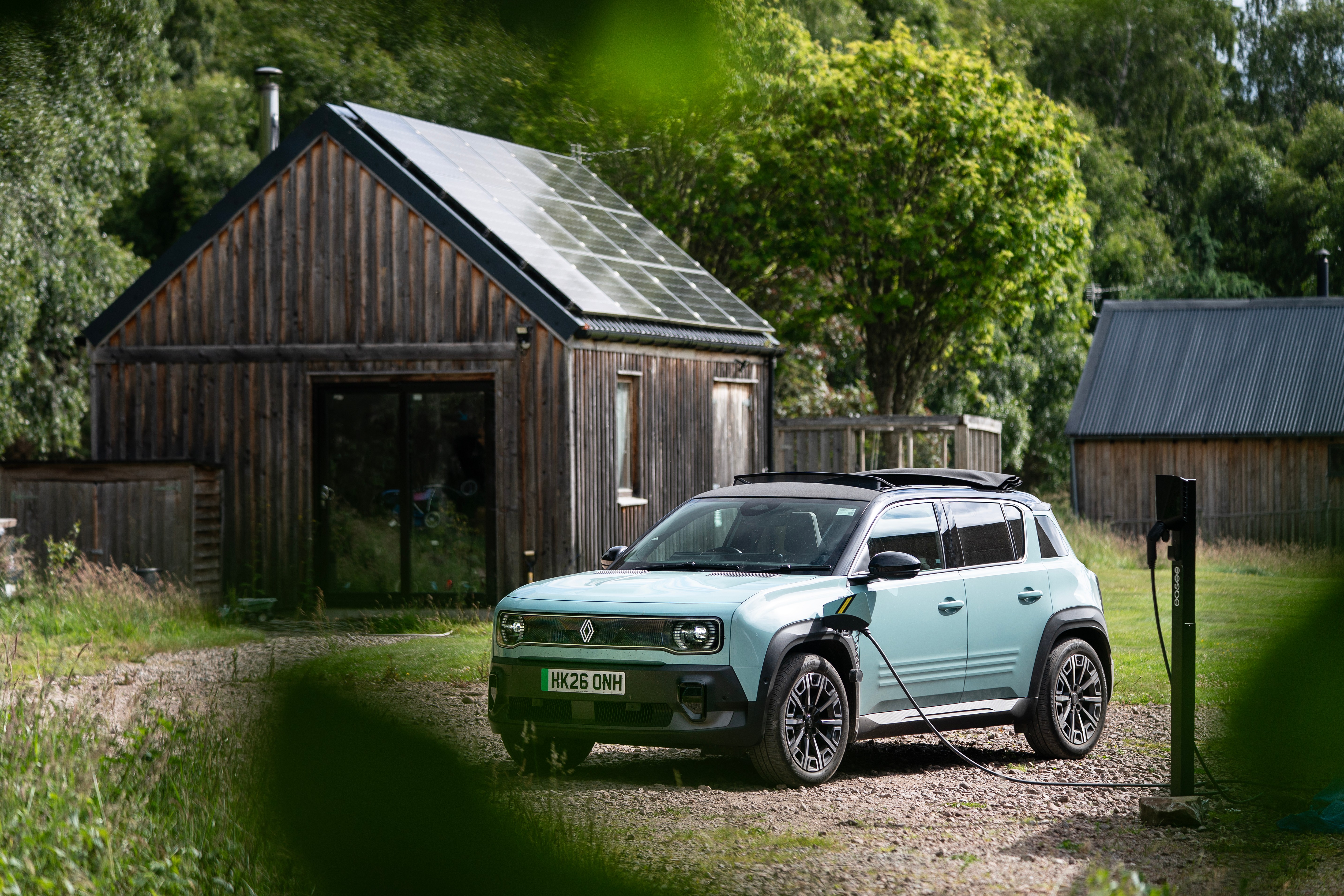
The five-day, 1,000-mile expedition demonstrated the feasibility of solar energy, battery storage, and smart charging, showcasing sustainable transportation solutions without relying on grid electricity.
Why it matters: Stop selling solar panels and start selling 'free fuel'—integrating EV charging and storage is now the only way to protect your margins as hardware prices commoditize.
Let’s call this what it is: a high-budget victory lap. After Easee’s well-documented regulatory headaches with the Swedish National Electrical Safety Board (Elsäkerhetsverket) over the last year, they needed a win that shouted 'reliability' and 'innovation.' Driving a Renault from Land’s End to John O’Groats on pure photons is exactly the kind of theatre required to pivot the conversation from compliance to capability.
The Death of the 'Panel-Only' Sale
For the average installer in the DACH region or the Benelux, this isn't about a road trip; it's about the ecosystem upsell. We are moving rapidly away from selling peak kilowatts and toward selling 'miles of range.' When you tell a customer in Birmingham or Berlin that their 10kWp array can fuel a 1,600km journey without touching the grid, the ROI calculation shifts from a dry 10-year payback to immediate lifestyle autonomy. If your proposals don't explicitly link PV yield to EV range using real-world consumption figures (like the Renault Megane E-Tech’s ~16kWh/100km), you are losing the psychological battle to the guy who does.
The Hardware Integration Play
The technical 'secret sauce' here wasn't the car; it was the orchestration of the BESS (Battery Energy Storage System) and smart charging logic. To pull this off in the UK’s notoriously fickle sunlight, Easee had to manage 1:1 solar matching—ensuring the charger modulates its output in real-time to match the solar curve. Pro tip: Start looking at dynamic load balancing not as a 'nice-to-have' feature, but as a mandatory requirement for any C&I project involving more than three chargers. As grid constraints tighten across Europe, the ability to buffer solar into a local battery and then 'dump' it into a fleet at 22kW is the only way these projects will get permitted.
Ignore the fluff of the road trip and look at the margin. A standard PV install is a race to the bottom on price. A Solar + Storage + EV integrated solution using an EMS (Energy Management System) like Easee’s or Schneider’s Wiser allows for a 30-40% higher ticket price with significantly stickier customer loyalty.