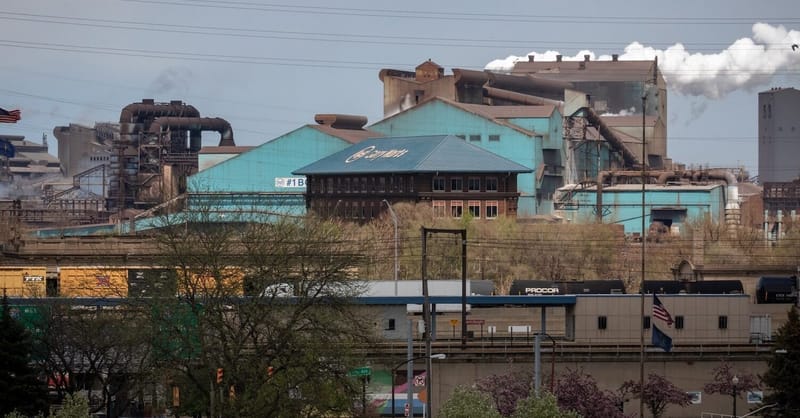
A year ago this month, Japan’s Nippon Steel acquired U.S. Steel, promising to plow $14 billion into America’s legendary but long-declining steel industry.
Why it matters: Heavy industry is moving from 'optional ESG' to 'mandatory decarbonization,' creating a massive new class of gigawatt-scale solar clients who value reliability over the lowest bid.
Stop looking at this as a "rust belt" story. For European project developers and EPCs, Nippon Steel’s acquisition of US Steel is a loud signal for the next phase of the energy transition: the total cannibalization of industrial power demand by renewables. When a steel giant pivots to "clean investment," they aren't just putting a few 400W modules on a warehouse roof; they are becoming the primary anchor off-takers for gigawatt-scale solar-to-hydrogen hubs.
The CBAM Pressure Cooker
Why should an installer in Dortmund or Seville care about Indiana? Because of the EU Carbon Border Adjustment Mechanism (CBAM). As European steelmakers like ThyssenKrupp and ArcelorMittal race to decarbonize to avoid blistering carbon taxes, their global competitors—including the newly reorganized US Steel—must follow suit or be locked out of the premium European market. This creates a global arms race for low-carbon electrons.
We’ve seen this pattern before. When the automotive sector went electric, the supply chain for batteries tightened overnight. As the heavy industry sector—responsible for roughly 7% of global CO2—pivots to green steel, the demand for high-efficiency N-type modules and Tier-1 inverters will face a similar squeeze. If you’re not positioning your business to handle massive industrial co-location projects, you’re fighting for crumbs while the main course is being served in the industrial corridors.