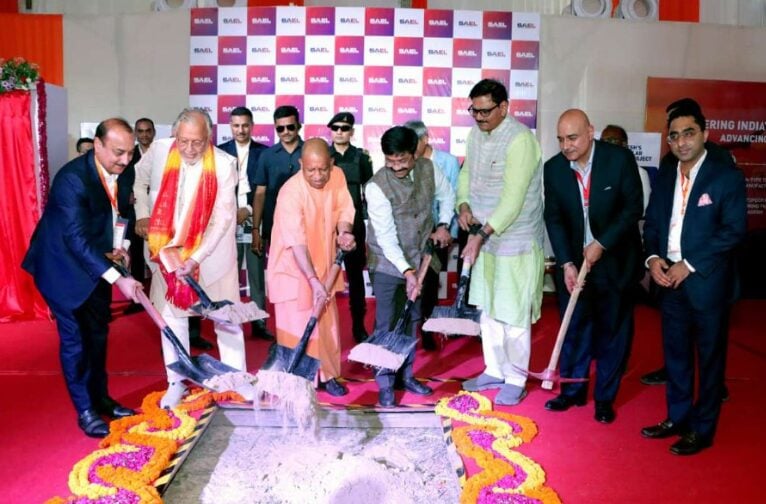
SAEL Industries has broken ground on a 10GW integrated solar manufacturing facility in Jewar, Uttar Pradesh.
Why it matters: As the EU tightens supply chain transparency rules, a 10GW non-Chinese alternative isn't just a backup—it's your future insurance policy against import bans and ESG audits.
While European installers have been obsessively tracking Red Sea shipping surcharges and the latest price floor rumors from the 'Big Four' in China, India has been quietly building a fortress. SAEL’s groundbreaking on a 10GW integrated facility—split evenly between 5GW of cells and 5GW of modules—isn't just a win for the subcontinent’s domestic targets. It is a massive flashing signal for European procurement officers who are tired of being held hostage by a single geography.
The 'China + 1' Strategy Becomes Real
We’ve heard the pitch before: India will be the alternative to the Jinko-LONGi-Trina triad. But for years, the quality and scale weren't there. That changes at the 10GW mark. When you hit this level of vertical integration, you aren't just assembling kits; you're controlling the bill of materials (BOM). For a developer in Spain or a residential wholesaler in the DACH region, this represents a crucial diversification hedge. With the EU’s Corporate Sustainability Due Diligence Directive (CSDDD) looming, having a supply chain that bypasses Xinjiang is no longer a 'nice-to-have'—it’s a compliance requirement.
Don't Ignore the Cell Integration
The 5GW cell capacity is the most important number here. Most 'non-Chinese' modules we see in the European market are actually just Chinese cells wrapped in local glass and frames. SAEL is aiming for true integration. If they can execute on n-type TOPCon at this scale, they will be competing directly on the LCOE (Levelized Cost of Energy) floor. Watch the efficiency numbers closely: if SAEL can't consistently clear the 22.5% module efficiency hurdle, they’ll be relegated to low-margin utility projects. But if they hit the mark, they become a viable alternative for the high-spec C&I market in Germany and the Netherlands.
The takeaway? Stop looking at India as a 'secondary market.' If SAEL delivers, your next 50MW procurement block might just come from Uttar Pradesh instead of Jiangsu.