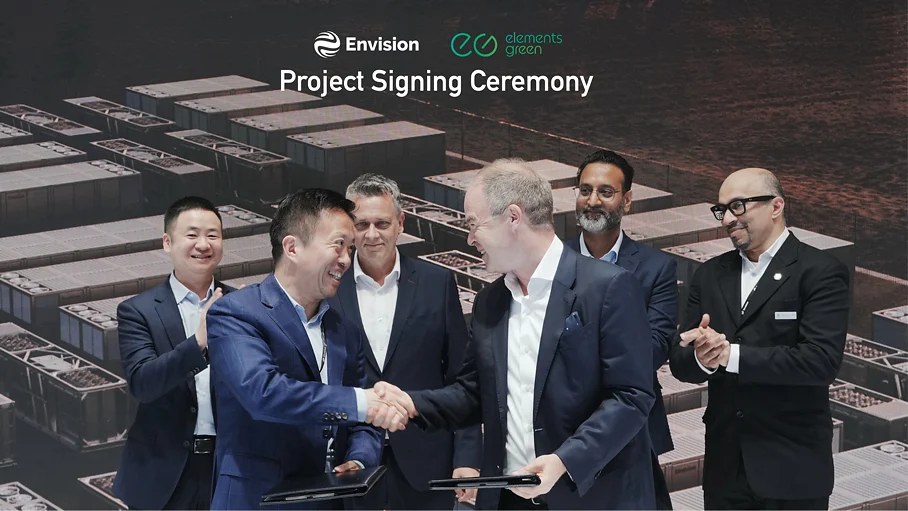
EnBW and VPI have launched construction on large-scale BESS projects in Germany, while Elements Green and Eku Energy have agreed supply and acquisition deals respectively for separate 400MW/1,600MWh projects.
Why it matters: Utility-scale storage is shifting to 4-hour durations, which will flatten price volatility and kill the business case for short-duration, poorly optimized BESS projects.
If you’re still thinking of Battery Energy Storage Systems (BESS) as 1-hour "sprinters" designed to soak up Frequency Containment Reserve (FCR) payments, this 2.5GWh wave in Germany should be your wake-up call. We are witnessing the death of the short-duration asset. When EnBW and VPI (backed by the deep pockets of Vitol) move into 400MW/1,600MWh territory, they aren't just stabilizing the grid; they are fundamentally changing the merit order of the German power market.
The End of the FCR Honeymoon
For years, German storage was a small-scale game dominated by 1-hour systems chasing high-margin ancillary services. But the FCR market is shallow; it’s easily saturated. By building 4-hour duration systems, these players are pivoting toward energy arbitrage—literally moving midday solar production to the evening peak. For a C&I installer in the Rhineland or a project developer in Brandenburg, this means the price volatility you’ve been promising your clients as an ROI driver is about to be suppressed by these massive utility-scale sponges.
The 4-Hour Standard
The 1,600MWh specification from Elements Green and Eku Energy is the new industry benchmark. In the UK, we saw this shift two years ago; Germany is now following suit with a vengeance. If you are pitching a storage solution today with less than a 2-hour duration, you are selling an obsolete asset. Why? Because as the Strategie Stromspeicher (Germany’s storage strategy) matures, the value will shift from fast frequency response to deep energy shifting. Large-scale assets will cannibalize the spreads that smaller, inefficient systems rely on.
The Supply Chain Reality
Note the players involved: Eku Energy (Macquarie roots) and VPI. These are Tier-1 financiers who don't bet on unproven tech. They are likely locking in LFP (Lithium Iron Phosphate) cells at sub-$60/kWh prices at the pack level. If your local distributor is still quoting you 2022 prices for containerized solutions, show them these headlines. The scale of these projects allows for a Levelized Cost of Storage (LCOS) that makes 'solar-only' projects look like a risky gamble in a world of increasing negative prices.