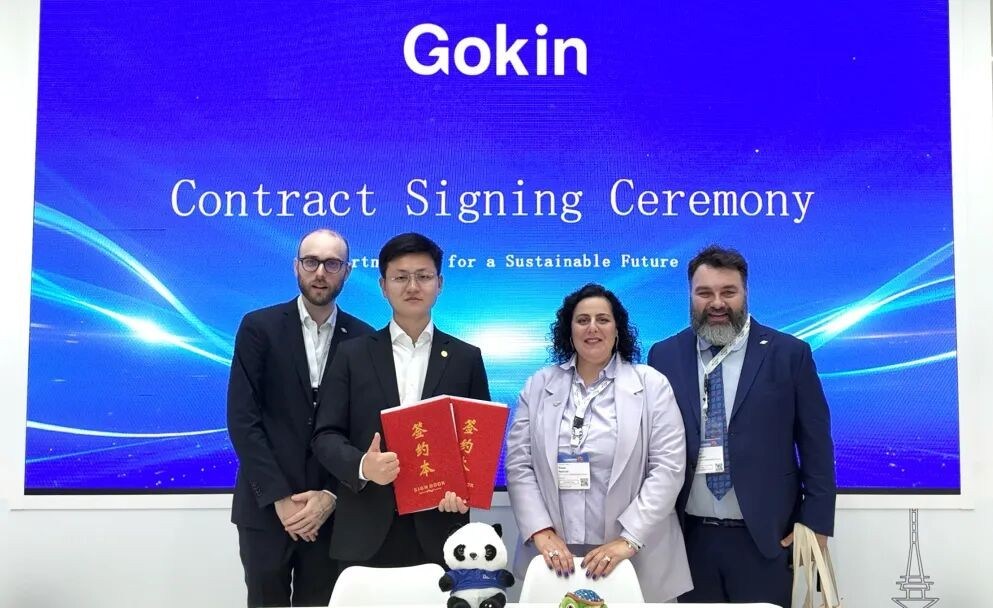
Intersolar Europe 2026 featured Gokin Solar's high-efficiency PV modules and a strategic partnership with PV CYCLE for photovoltaic recycling.
Why it matters: As the EU tightens circular economy laws, manufacturers without a credible recycling partner like PV CYCLE will soon be blacklisted from major commercial tenders.
The 'Green' Shield Against Market Protectionism
Gokin Solar entering Intersolar isn't just another booth in Munich; it is a calculated attempt to bypass the 'cheap Chinese module' stigma. By leading with a PV CYCLE partnership, Gokin is acknowledging a reality that many tier-2 players ignore: the EU’s evolving Ecodesign Directive and the WEEE (Waste Electrical and Electronic Equipment) regulations are becoming non-tariff trade barriers. If you are a developer in France or the Netherlands, you aren't just buying peak watts; you are buying a 25-year liability. Gokin is trying to de-risk that liability from day one.
BC vs. TOPCon: The Margin War
Gokin’s dual-track approach with Back Contact (BC) and TOPCon technologies is a direct challenge to the incumbents. While TOPCon is currently the C&I workhorse across Europe, BC technology is the new high-ground for residential rooftops where aesthetics and efficiency (now pushing past 23.5% in lab settings) command a premium. For installers, this creates a 'wait and see' problem. Why lock into a massive LONGi or Jinko contract if Gokin can deliver similar BC efficiencies with a pre-integrated recycling solution at a lower entry price?
The Field Reality: Logistics Over Labels
We’ve seen this pattern before. A manufacturer arrives with great datasheets and a 'green' partnership, but the real test isn't the recycling—it’s the RMA. A 5MW project in Brandenburg doesn't care about a recycling certificate if three pallets show up with micro-cracks and there’s no local warehouse for replacements. Gokin’s success won't be measured by their PV CYCLE membership, but by whether they can match the boots-on-the-ground support of someone like Trina Solar or Qcells. Without that, the 'green value chain' is just expensive marketing.