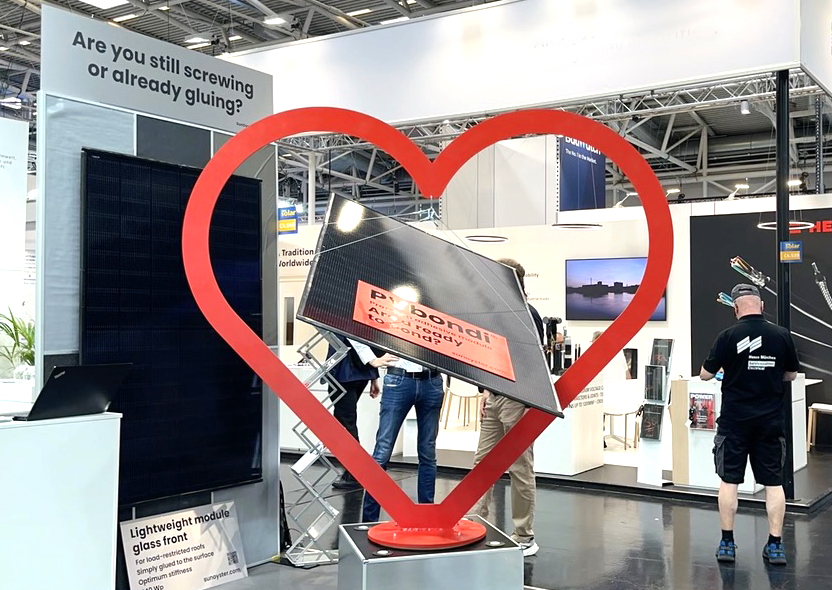
Sale de fábrica equipado con una subestructura de plástico, mediante la cual el módulo se adhiere directamente a la cubierta.
Why it matters: Low-load roofs are the final frontier of C&I, but don't let a 'peel-and-stick' promise void your client's 20-year membrane warranty.
We’ve all been there: a 15,000 m² industrial roof in the Ruhr Valley or an aging warehouse outside Barcelona that looks like a goldmine for a PPA, only for the structural engineer to come back with a hard 'no.' When a roof can’t handle more than 10-15 kg/m², your standard Tier 1 glass-glass module and ballasted K2 or Van der Valk system are dead on arrival. Enter Sunoyster’s self-adhesive lightweight module. It’s a seductive pitch—peel, stick, and walk away—but as anyone who remembers the Uni-Solar era can tell you, the devil isn't just in the details; he’s in the chemistry of the glue.
The Thermal Expansion Headache
The engineering challenge with adhesive PV isn't the stickiness; it's the coefficient of thermal expansion. A PV module on a hot July afternoon in Spain can hit 70°C, while the TPO or PVC membrane it’s stuck to has a completely different rate of expansion and contraction. If that integrated plastic substructure Sunoyster is using isn't perfectly decoupled, you aren't just installing solar; you're installing a giant mechanical shear that will eventually tear the roof membrane or delaminate the cells. Installers need to ask: has this been tested for 20 years of thermal cycling, or just for a few seasons in a lab?
The Warranty Minefield
Before you get excited about bypassing heavy ballast, call the roof membrane manufacturer (Sika, Bauder, or Carlisle). Most will void a 20-year warranty the moment you apply a non-approved adhesive directly to their product. For a C&I project developer, the margin gained by winning a 'difficult' roof can be instantly wiped out by a single leak claim five years down the line. Sunoyster is a high-pedigree German firm, but they are fighting an uphill battle against the industry’s collective memory of adhesive failures.