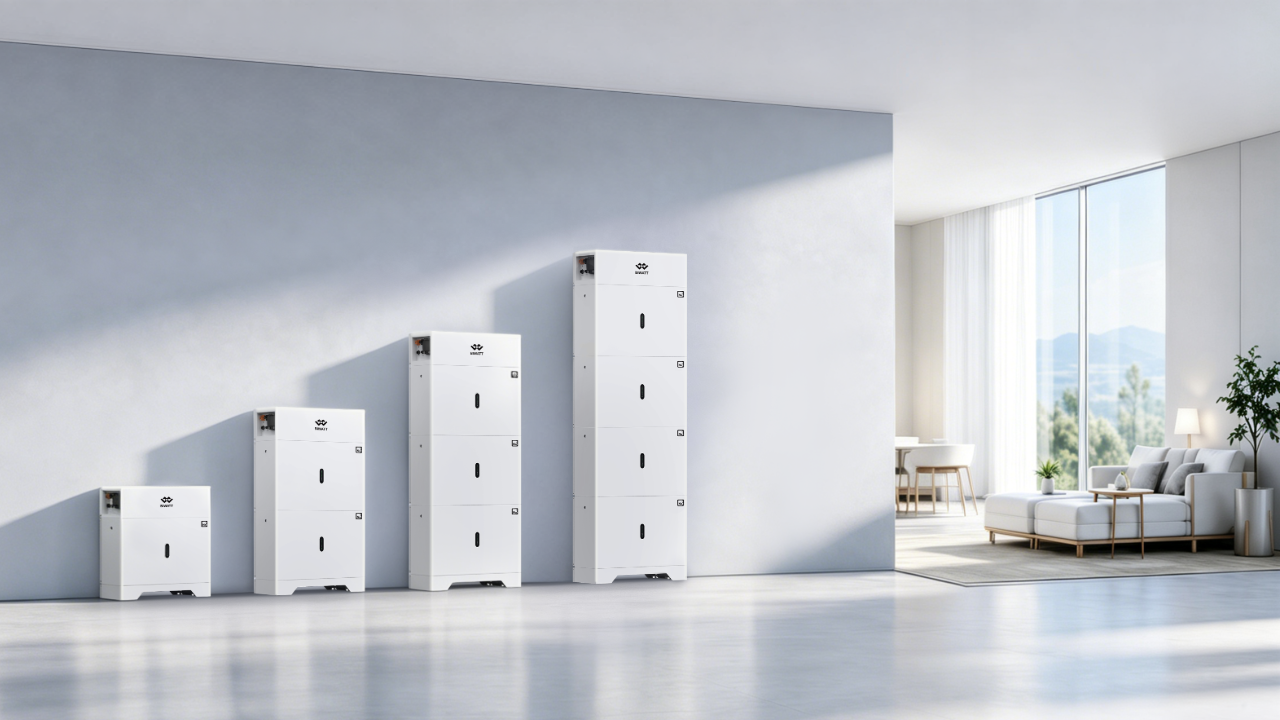
La nueva serie PowerNest R5 presenta una arquitectura apilable y sin cables que utiliza la tecnología de iones de sodio NFPP.
Why it matters: Sodium-ion solves the winter discharge headaches of LFP, making it a potential game-changer for outdoor battery installs in Northern Europe.
We’ve spent the last five years convincing customers that LFP (Lithium Iron Phosphate) is the gold standard for safety and longevity. But if you’ve ever fielded a 7:00 AM call from a frustrated homeowner in Munich or Warsaw whose battery won’t discharge because the ambient temperature in the garage hit -5°C, you know LFP’s Achilles' heel. Biwatt’s move into Sodium-ion (NFPP) technology isn’t just a quest for cheaper materials; it’s a direct assault on the thermal limitations of our current storage meta.
The Cold Hard Math
Sodium-ion batteries can maintain over 90% of their capacity at -20°C. For installers in DACH or the Nordics, this changes the conversation. Instead of expensive indoor climate-controlled installs or oversized LFP arrays to compensate for winter performance drops, you can look at a PowerNest R5 as a ruggedized alternative. While the energy density is lower—meaning these stacks are slightly chunkier than a BYD HVS or a Huawei LUNA—the trade-off is a chemistry that is inherently safer and less prone to thermal runaway.
The Margin Trap
Don't get blinded by the "new tech" shine. As a business owner, you need to look at the bankability. Biwatt is pushing an all-in-one stackable architecture to minimize your labor costs (no cables, no mess), but the real question is long-term support. If a sodium cell fails in 2028, will the replacement modules be compatible? We’ve seen this movie before with early-gen lead-crystal and niche lithium chemistries. Unless Biwatt can prove their NFPP cells have a cycle life that rivals the 6,000+ cycles we see from Tier-1 LFP players, the TCO (Total Cost of Ownership) might not actually pencil out for a standard 10kWh residential setup.
My advice: Keep an eye on the price-per-kWh. If Biwatt enters the EU market at a 20% discount to LFP, it’s a viable option for your budget-conscious C&I or residential clients in colder climates. If the price is parity, stick to the brands where you already have a direct line to a service engineer who speaks your language.