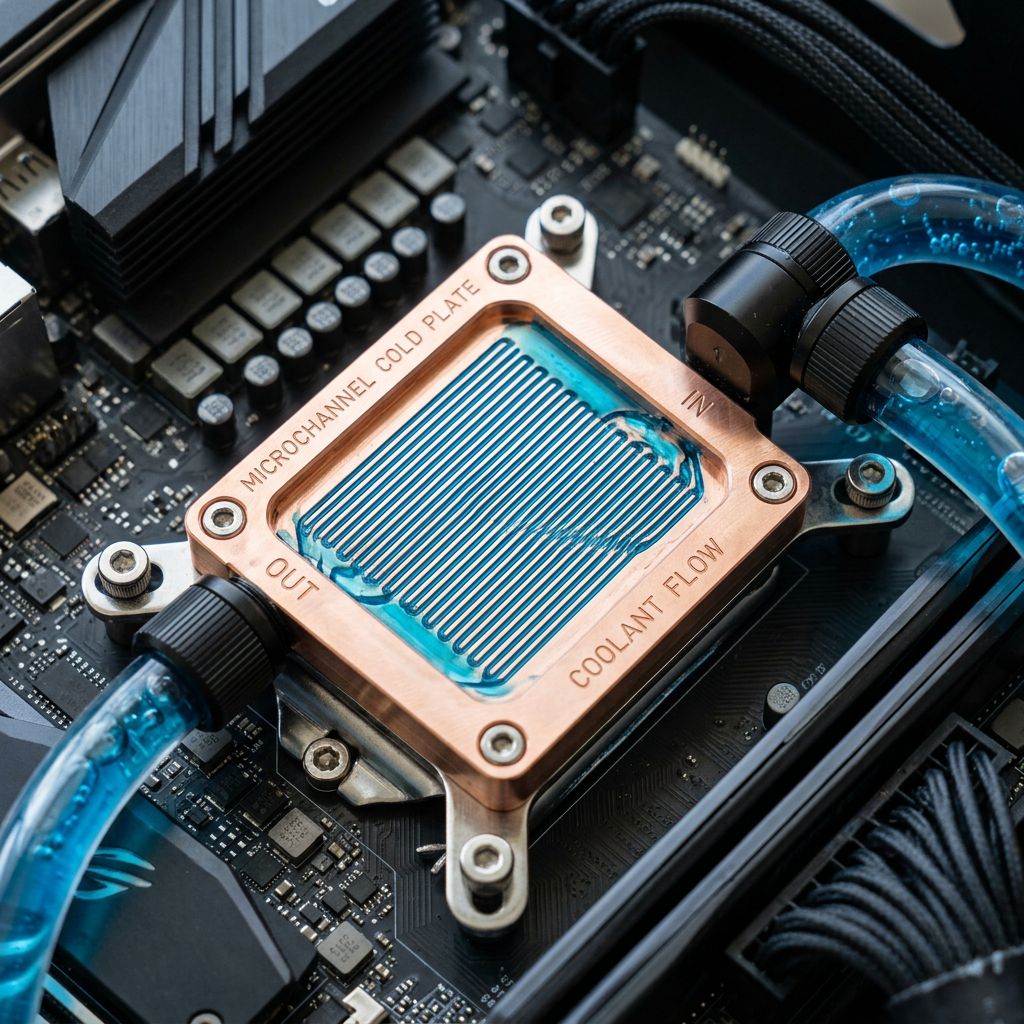
Researchers at IIT Gandhinagar have developed a new Friction Stir Channelling (FSC) technique for manufacturing liquid cold plates, vital for thermal management in various sectors.
Why it matters: Thermal management is the difference between a BESS project that hits its 15-year ROI and one that dies of cell degradation in year seven.
Don’t let the modest ₹20 lakh (€22,000) seed grant fool you; this isn't just academic tinkering. In the European BESS market, we are currently witnessing a massive pivot from air-cooled to liquid-cooled systems. If you’re installing Sungrow or Tesla Megapacks, you’re already dealing with liquid cold plates. The problem? The supply chain for these high-precision components is bottlenecked and heavily reliant on specific manufacturing hubs.
The Thermodynamics of Your Margin
Thermal management is the silent killer of project IRRs. A BESS container sitting in the Spanish sun or a German industrial park doesn't just need to stay cool to avoid a thermal runaway event; it needs to stay cool to prevent the aggressive degradation that kills warranties. Friction Stir Channelling (FSC) is a solid-state processing technique that allows for the creation of internal cooling channels without the traditional mess of casting or brazing. For an installer, this eventually translates to lower CAPEX for the rack and potentially higher round-trip efficiency (RTE).
We’ve seen this pattern before: a niche manufacturing breakthrough reduces the cost of a peripheral component, which then allows for a 5-10% drop in total system price. If you are a developer planning a 50MW/100MWh project for 2026, you should be looking at how these manufacturing efficiencies in the "boring" parts of the stack—the plates, the pumps, and the manifolds—are going to drive down the Levelized Cost of Storage (LCOS).