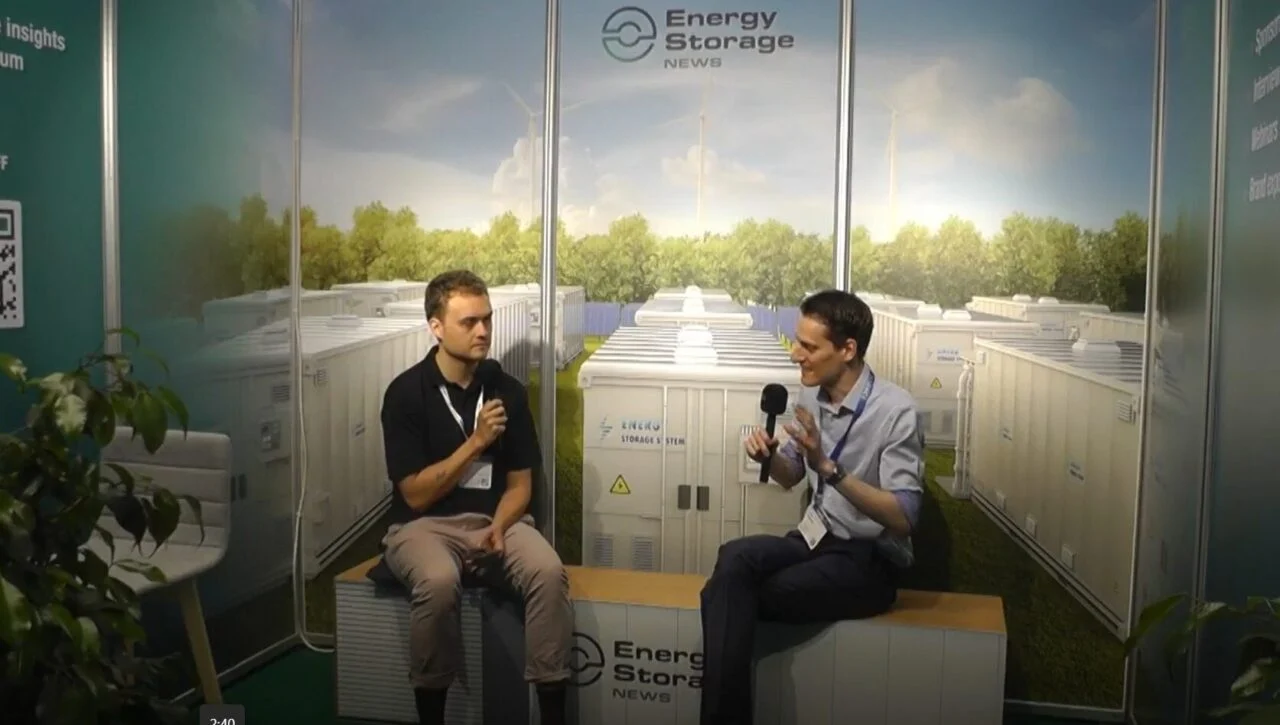
We sat down with Lars Stephan, EMEA director of marketing, policy and public affairs for system integrator Fluence, to discuss energy storage, data centres and cybersecurity at Intersolar last month.
Why it matters: Big Tech is the new 'whale' for BESS, but they won't buy your project unless you can prove it's hacker-proof and NIS2 compliant.
If you think the 'Data Center' hype is just for AI stock traders, you’re missing the biggest shift in European BESS procurement since the 2022 energy crisis. Companies like Microsoft and Google aren't just looking for 24/7 Carbon-Free Energy (CFE); they are becoming the grid's de facto stabilizers. But here is the catch: they won’t touch your project if your cybersecurity stack looks like a Swiss cheese of unpatched Chinese firmware.
The NIS2 Shadow Over Your Pipeline
While most installers are still obsessing over fire suppression systems, the real bottleneck for 2025 is the NIS2 Directive. This EU regulation effectively categorizes large-scale storage as 'essential infrastructure.' If you are developing a project intended to serve a data center in the Frankfurt-London-Amsterdam-Paris (FLAP) corridor, your BESS provider needs more than a decent price per kWh. They need a proven, audited chain of custody for their software. Fluence is leaning into this because they know that for a Tier-1 data center operator, a cyber-breach is a hundred times more expensive than a 5% premium on hardware.
The 'Anchor Tenant' Strategy
We’ve seen this pattern before in the early days of utility-scale PV. You don't build on speculation; you build for a high-credit-rating 'anchor tenant.' In today's market, that's the data center.
For the C&I installer, the signal is clear: start asking your inverter and BESS suppliers for their SOC2 compliance and NIS2 readiness. If they look at you with a blank stare, move on. A €1M storage project can be rendered un-bankable overnight if it doesn't meet the digital security requirements of the corporate off-taker.