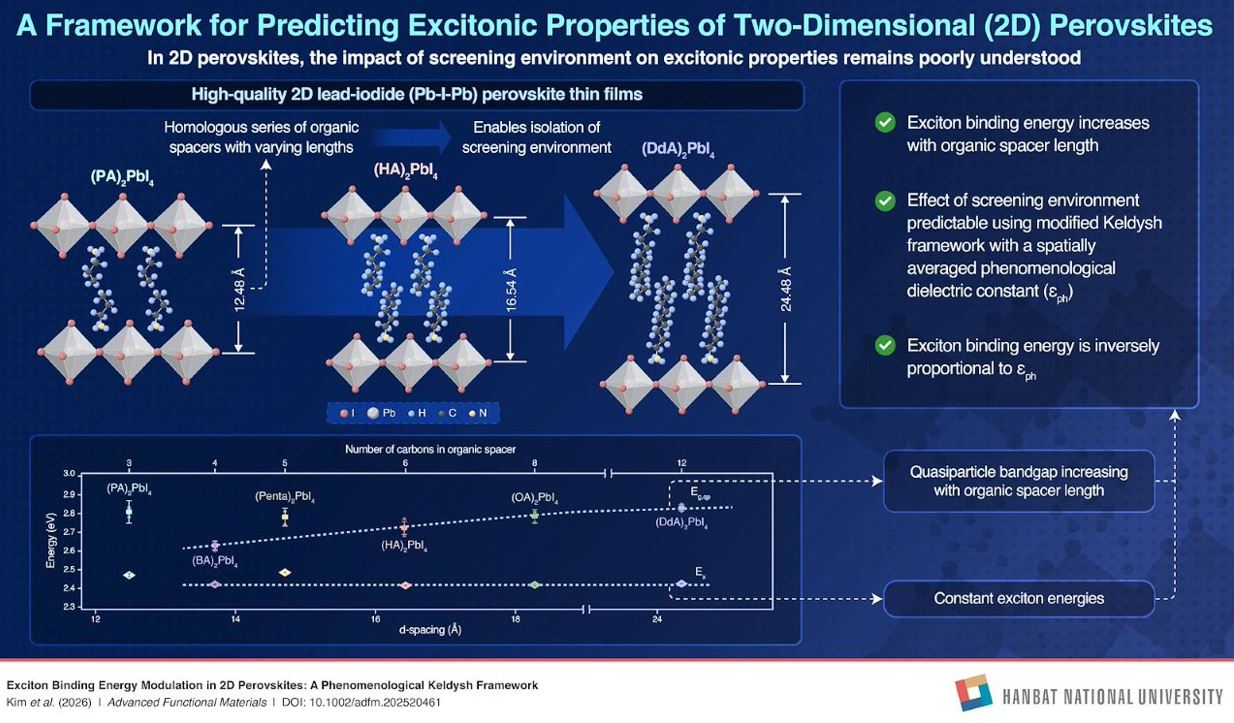
Researchers have developed a predictive framework for 2D perovskite design to enable more efficient, stable solar cells.
Why it matters: Stability has been the 'death valley' for perovskites; this framework is the bridge that could finally bring 30% tandem modules to your 2027 project pipeline.
The 'Efficiency Vanity' Trap
We’ve been hearing about the 'Perovskite Revolution' since the Merkel era. Every week, a new lab claims a record-breaking efficiency percentage that looks great on a PowerPoint slide at Intersolar but means absolutely nothing to an EPC signing a 25-year performance guarantee. For the person on the roof, perovskite has been synonymous with 'unstable.' The transition from 3D to 2D perovskite structures is the industry finally admitting that durability is the bottleneck, not conversion rates.
Why This Framework Changes the Procurement Timeline
Historically, perovskite research was a game of 'chemistry bingo'—mixing organic and inorganic layers and hoping the result didn't degrade the moment it saw a German winter. This new predictive framework moves us away from trial-and-error. By modeling how 2D structures (which are inherently more resilient to moisture and heat) can be optimized for charge transport, we are seeing the roadmap for the first commercially viable tandem modules.
The Field Engineer’s Reality Check
Don't expect to be installing these next Tuesday. However, if you are a project developer planning a 50MW+ pipeline for 2027, this is the signal that the 'stability gap' is closing. We are moving from 'can we make it work?' to 'how do we mass-produce the 2D layer?' If this framework holds, the silicon-only era has a very clear expiration date. When stability parity is reached, the 20% jump in energy density will make standard TOPCon look like outdated tech overnight.